Content niches on YouTube are getting blurrier by the day. Educational creators are picking up entertainment formats, Shorts creators are transitioning to long-form videos, and commentary channels are experimenting with interviews and co-hosting videos. All that is happening due to the encouragement of current YouTube trends to experiment more. And yet, the competition for attention continues to grow, not just in view counts but also in securing audience loyalty and watch time. Of course, you follow YouTube monetization requirements and all the basic, necessary tips, but you also need to go further and offer your content to new audiences in order to grow.
Just posting more videos isn’t going to cut it anymore, no matter how quickly you can produce them. YouTube's recommendation system is now way more interested in showing viewers content they care about than it is in how many videos you manage to bring on. That’s why YouTube collaborations have gone from a “nice to do some time” thing to a straight-up growth strategy. It’s a perfect way for those who already done natural crossovers like shared challenges, guest interviews, etc.
The existence of the YouTube collaboration feature is a sign of just how much the platform is shifting towards this idea of creators working together and sharing audiences. Let’s find out how to do it successfully!
How the YouTube Collaboration Feature Works
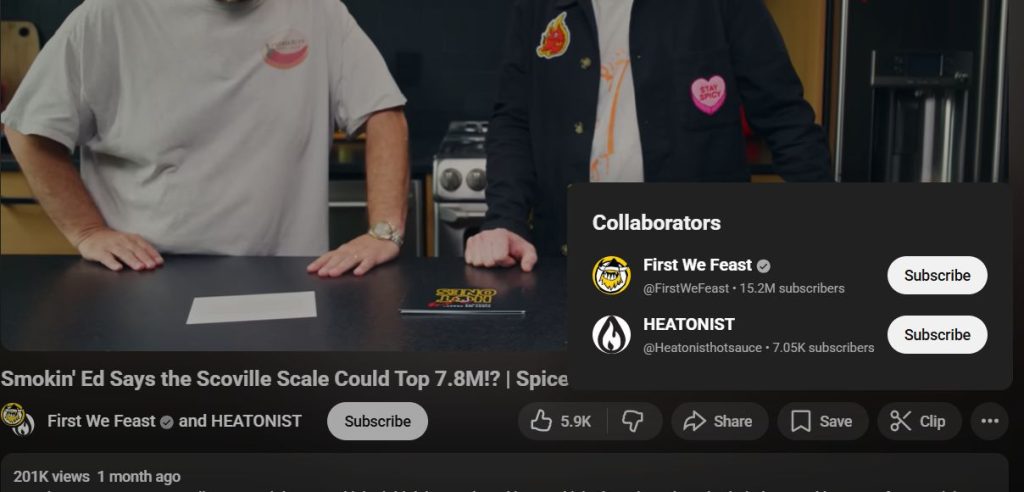
First We Feast’s collaboration with HEATONIST shows the button “Subscribe” for both creators
The YouTube collaboration feature is a necessity for creators who are in a constant search for efficient YouTube channel tips. It lets one channel post a single video that’s automatically linked to other channels. Unlike the old way of collaborating, where one channel uploads and the other is just a guest mentioned somewhere in the description, native collaboration on YouTube links the two channels up at the platform level straight off, and it’s a direct, official connection. You can add this feature to any type of video, even old streams!
To connect another — up to 5 creators — YouTuber, you should go to YouTube Studio, where you upload a video, then through the Audience tab add your collaborators by their channel handle and publish after they accept the invitation.
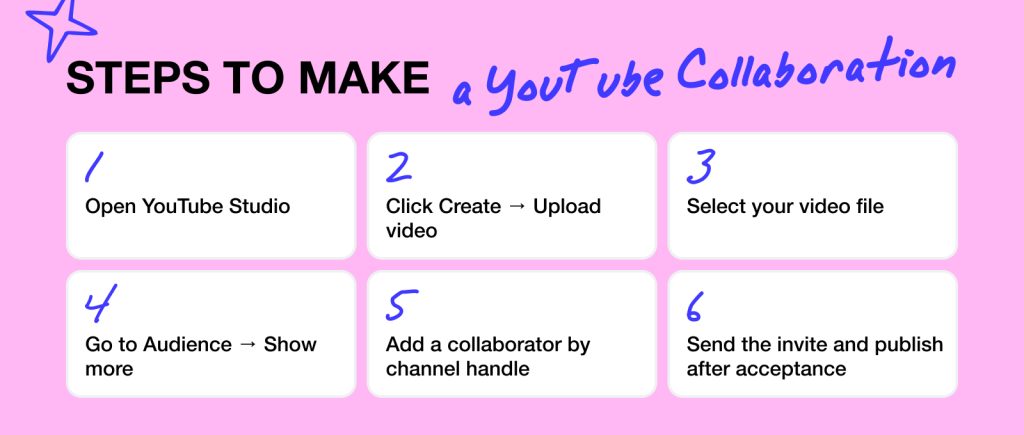
Once you’ve set up a collaboration:
- The video gets linked to both creators as collaborators on YouTube;
- It gets shared with the combined audience of both channels through their feed;
- It will be seen only in the channel of the creator who uploaded the video.
This makes collaborating on YouTube different from guest appearances. Rather than relying on viewers having to go and find the other channel, the platform automatically recognizes the shared authorship and adjusts things so the video gets seen by the right people. And consequently, the new audience makes all YouTube monetization methods in use show better results.
Like most YouTube growth features, getting access to collaboration depends on:
- How well you stand with your channel policies;
- What your account history is like and how active you’ve been;
- Where you are with regards to the rollout phase — a lot of people still see limited or beta-only access.
And for good measure, there are some structural limitations that come with native collaboration, too. For example, the final revenue belongs only to the creator who uploaded the video. That’s why you can only have an off-platform agreement, if needed. If you’re planning to share the income with your collaborators after a collab, it’s smart to figure out how payouts will work beforehand. Lots of creators find it useful to use payment platforms for YouTubers designed to keep track of money, sort out international fees, and keep everything transparent.

Learn more
Want to Grow Faster on YouTube? Get a free channel audit from Mediacube experts. Identify what’s holding you back and receive a clear action plan to boost your growth. [Get a Free Audit](https://mediacube.io/form?page=&form=welcome)
[Get a Free Audit](https://mediacube.io/form?page=&form=welcome)Native Collaboration vs Traditional Collaborations
So how does native collaboration on YouTube compare to the traditional way of doing it? Let’s compare those two types.
| **Aspect** | **Native Collaboration** | **Traditional Collaboration** |
| **Setup** | Built-in | Manual executing |
| **Distribution** | Combined audience via feed | Audience must follow the link to check another collaborator |
| **Analytics clarity** | All key metrics in one place available to share with a collaborator | Fragmented metrics |
| **Scalability** | Easy to repeat | High coordination cost |
Now we are not saying traditional collaborations don’t work! They still do, especially when you’re working in a small niche community. But the YouTube collab feature cuts out unnecessary steps and makes it a lot easier to collaborate and grow over the long-term.
How Collaborations Impact YouTube Metrics
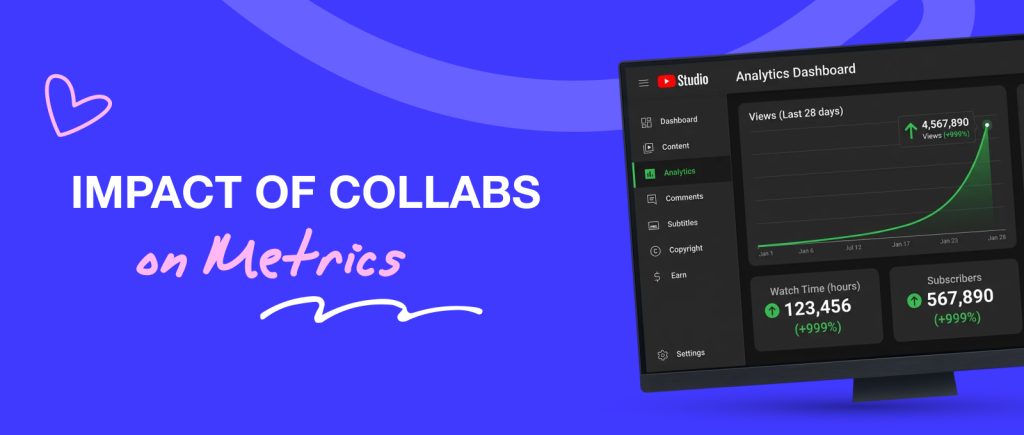
Collaboration won’t automatically kickstart growth, but it does change the way the algorithm looks at creators. It’s what the algorithm sees that can either make things better or worse, depending on the execution. YouTube pays attention to creators who are game to cooperation, communication, and alliance with other YouTubers.
There are key metrics shifts that show how successful the collaboration has been. This is what creators typically see when collaborating:
- Watch time: Sometimes goes up when you’re teaming up with people who have the same vibe as your own audience, and when their subscription number is bigger, that’s an additional benefit;
- Subscriber growth: Usually moves at a nice pace to start with, and the subscribers you get through collaborating tend to be more into what you do than the random ones;
- Click-through rate (CTR): Often drops at first because you’re exposing yourself to people who might not be as engaged in the first place;
- CPM & RPM: Expect short-term ups and downs, but no worries — it's how well you keep those viewers coming back for more that really matters.
For creators at that growth-stage, where things are really finally changing for the better, YouTube collaborations can really help with getting your name more visible without having to renovate your whole brand. Instead of chasing viral or clickbait formats, collaborating with other creators who’ve got a similar vibe gets your channel in front of people who already trust them. As a result, you’ll get more stable viewership numbers.
Collaborations can also depend heavily on brand deals, too, becauseadvertisers will often look at how much of your audience overlaps with theirs, how you perform teamwork, and how deep the engagement is when trying to estimate the average sponsorship cost that a creator can realistically command.
If we speak about niches, collaboration tends to do best in those where people are really invested in getting the facts right or where there’s some real history behind a format. For example:
- Education and workshops where people go to learn something new;
- Commentaries and interviews where folks actually get to know who they’re following or love like celebrities and idols;
- Entertainment shows with a regular format, like guest stars, so viewers know what to expect.
Shorts collaborations can bring fast reach for you, while longer-form collaborations build real engagement with your audience. When looking for ideas for creators’ collaborations, YouTubers tend to use both formats effectively and, as a result, see the most success. Lots of creators use Shorts as a way to try things out first and then use their longer-form content to keep people coming back for more. This approach actually works pretty well with how YouTube figures out if people like your content. And if you want to count approximate numbers, you can use our YouTube revenue calculator that shows close-to-reality metrics depending on CPM, views per day, and so on.
Common Collaboration Mistakes
Even seasoned pros still manage to trip over the same mistakes, like:
- partnering up with people who have a completely different audience;
- prioritizing numbers over whether your target audiences even overlap;
- expecting the algorithm to notice and promote you and then getting left out in the cold when it doesn’t;
- skipping over the analysis to figure out what actually worked and what needs work;
- forgetting to use new collab content for cross-promotion on other social media to expose it to even wider audiences.
These things can bring short spikes in metric numbers, but overall after that, it transforms into stagnation.
As a YouTube partner helping a variety of creators, Mediacube puts a lot of effort in collaboration as part of a bigger picture of growth and success. We have a wide circle of creators so we have all the means to find a proper partner to do a collab together. This approach helps creators avoid partnerships that won’t work out and instead aim for some real lasting results.
Frequently Asked Questions on YouTube Collaborations
Making collaboration should be a thought-through process, that much is clear. To make things even easier, we summed up the key information you need to know if you want to try this growth method out.
How to do a collaboration on YouTube?
If you’re a YouTube creator, you’ve got a couple of options here: you can use the collaboration feature that’s built into the platform, or you can go the traditional way and get a guest from another channel to appear on your video.
Do collaborations boost the algorithm automatically?
Unfortunately, no. Collaborations do boost your signals a bit, but getting more views and making the audience stay is what really matters when it comes to growing your channel.
Can collaborations hurt your channel?
Yes, but only if the video doesn’t line up with what your audience is into, that can lead to people not sticking around to watch the whole thing.
Are collaborations worth it for small channels?
Actually, yes! It's about finding someone relevant to you and your audience rather than going for the biggest channel you can find. Besides, getting your name out in front of a bigger audience can be useful.
Does YouTube prefer native collabs over guest appearances?
Native collaborations do give the algorithm a bit more information to play with, but ultimately, it's the quality of the content and your behavior that are going to make the difference.
Collaborations That Are Worth Your Time
The YouTube collaboration can shift your growth in a positive way. When you pair it up with quality content that really speaks to your audience, it can get you visibility that uploads alone just can’t match. But if you just throw it all together without a plan, you’ll get a bunch of noise with no real growth. The ones who make collaboration work for them are the ones who think of it as a smart growth way and support it with data, experimentation, and a deep understanding of the platform.
If you want to explore collaboration ideas, boost your channel’s growth, find out where your audiences overlap, or try to figure out which partnerships will really be productive, try Mediacube’s YouTube growth services that can ease your way to creativity and keep your channel prospering.