YouTube Playables is still a platform where access is limited and information is scattered. Most developers who want to publish on Playables cannot get in directly: the approval queue is long, documentation is sparse, and the platform updates faster than public-facing resources can keep up.
Mediacube has been an official YouTube partner since 2015, operating in video monetization for over a decade. We started publishing games on Playables in September 2025 and were among the first publisher accounts accepted into the monetization pilot. Since April 2026, every game in our portfolio is fully monetized.
That means we see the platform from the inside: the data, the payout mechanics, the analytics, and the direction of development. This article is a summary of the most important Playables updates as of July 2026 — written for developers who are evaluating the platform and looking for a publisher to get them there quickly.
Get it touch with our team to inquire directly.
Update 1: Analytics Got Significantly Deeper
Until mid-July 2026, publishers on Playables had access to exactly one metric per game: total game plays, broken down by 7-day, 28-day, and all-time windows. That was the full picture. It was enough to see that a game was alive, but not enough to understand who was playing, where, or how the audience was evolving.


That changed. The analytics layer now includes three new dimensions that can be applied to every individual game in a portfolio, as well as to the full portfolio view:
Age segments
Game plays can now be filtered by player age group: 13-17, 18-24, 25-34, 35-44, 45-54, 55-64, and 65+. Each segment is available across all three time windows (7-day, 28-day, all-time), and segments can be combined with geographic and gender filters.
A small but telling data point from our own portfolio: across all our Mediacube accounts over the past 28 days, 2.8% of all game sessions came from players aged 65+. YouTube’s gaming audience is broader than most developers assume. 🙂
Geographic breakdown
Sessions can now be filtered by country. The countries currently reflected in analytics correspond to where Playables access is live: USA, Australia, Canada, UK, India, and Malaysia. We have also observed partial traffic signals from the Czech Republic and Turkey, but since these do not appear as standalone filters in the analytics panel, it is likely that access in those markets is either very limited or still in early testing.
Gender
Sessions are now segmented by Female, Male, and Other. All three segments also include an Unknown category, which we believe represents game sessions from users who are not logged into their YouTube account — and therefore do not have demographic data attributed to their session.
What this means in practice
Previously, conclusions about a game’s performance could only be drawn at the channel level — you could see total plays, but not who was playing. Now you can ask and answer much more specific questions: Which age group has been playing this game most in the US over the last 7 days? How does the gender split differ between my top two titles? Is my casual puzzle game skewing older than I expected?
For developers, this translates into better creative decisions: knowing your audience lets you build for retention rather than guessing at it. For publishers, it enables smarter portfolio curation — identifying which game types resonate with which demographics, and targeting outreach to developers building in those categories.
What is coming next
The metric developers are most eager to see is average game session time. Once available, it will answer the question that currently sits at the heart of revenue optimization: how much advertising is a player actually consuming in a single session? Understanding session length will make it possible to calibrate ad placement — specifically, how many interstitials fit inside a typical session without degrading the experience — and to model expected revenue per player far more precisely.
Beyond session time, the updates most anticipated in the developer community are: DAU and MAU breakdowns, unique player counts, retention curves, and crash reporting at the individual game level. These are the metrics that make the platform predictable enough to scale on — and when they arrive, they will substantially lower the barrier for developers considering Playables as a serious revenue channel.
Publish your Game on YouTube
Publish games faster, manage monetization, receive fast and secure payouts worldwide, and get premium tech support from a team that helps developers grow globally.
Apply NowUpdate 2: Playables Is Rolling Out Across the European Union
According to multiple independent reports from July 2026, YouTube Playables began rolling out to European Union countries on both Android and iOS. If confirmed at scale, this represents the most significant geographic expansion of the platform since launch.
To put this in context: since Playables launched, the available markets were limited to six — USA, Canada, UK, Australia, India, and Malaysia. The EU collectively represents hundreds of millions of additional users across Germany, France, Spain, Poland, the Netherlands, Italy, and beyond. Even a partial rollout across major EU markets would meaningfully expand the potential player base.
For CPM calculations, EU markets occupy an interesting position. While the USA and UK consistently deliver the highest ad rates, Western European markets (Germany, France, Netherlands in particular) are strong tier-1 performers that have historically delivered CPMs competitive with—and in some categories exceeding—Australian rates.
This is a development we are watching closely from within our publisher account. If you are a developer with an existing game portfolio and have been waiting for European audience reach before committing to Playables — this may be the signal you’ve been waiting for.
Update 3: YouTube Is Testing Multiplayer Games in Playables
One of the long-standing constraints of YouTube Playables has been its single-player-only requirement. If your game had PvP or any multiplayer mechanic, Playables simply was not a viable distribution channel. That appears to be changing — at least experimentally.
What this signals matters more than the test itself. The fact that YouTube is willing to invest engineering resources in multiplayer infrastructure for Playables suggests the platform is being built for the long term — not as a casual side feature, but as a genuine gaming destination. If you’re developing a multiplayer or PvP game and would like to test it on YouTube Playables, you can submit an application using the form. We’ll forward your request to YouTube to help you be considered for the multiplayer testing program.
For developers who have multiplayer titles and have been excluded from Playables consideration, this is worth bookmarking. Multiplayer support opening up—even gradually—would expand the categories of games that can generate revenue on the platform substantially. We expect more details on the scope and timeline of this rollout to emerge in the second half of 2026.
Update 4: How Monetization Payouts Actually Work — Clarified
There has been a fair amount of confusion in the developer community about how YouTube transfers revenue to Playables publishers. This section documents what we know from direct experience.
Publishers do not see real-time per-game revenue. What is visible is the total daily revenue across an entire published portfolio, updated with a 48-hour delay. If you have 10 games live, you see the combined ad revenue for all 10 — but not the individual contribution of each title.
On the 15th of each month, YouTube issues a preliminary report breaking down revenue by individual game for the prior full calendar month. For example: on July 15th, you receive the per-game breakdown for June.
The key condition that was recently clarified: a game must have been live on monetization for the full calendar month to appear in that month’s report. A game published on July 4th will not appear in the August 15th report — it will appear in the September 15th report, because July was its first partial month.
This reporting structure is still maturing. YouTube’s monetization for video content has years of infrastructure behind it and runs like clockwork; Playables is an early-stage platform and the payout cadence reflects that. Expect this to stabilize over time — but for now, set expectations with your team that the first revenue report for any new title takes a bit of time.
Ready to Launch on YouTube Playables?
Create your account and get everything you need to publish, monetize, and grow your game globally.
Get StartedUpdate 5: Revenue Is Growing — Two Months Running
We are sharing this carefully because monetization on Playables is still in a pilot phase, fill rates are not at 100%, and per-game revenue data is not yet public. But the directional signal is clear and worth communicating.
Across our full published portfolio, revenue from May to June 2026 grew approximately 10x. June built on May, and we are seeing the same trajectory continue into July. This is happening even with ads being served only to specific geos and specific users — not the full player base.
The average CPM on Playables is already higher than what most comparable web gaming platforms deliver. This is in large part a function of the audience composition: because Playables is currently live in a small set of markets, the player base skews heavily toward tier-1 countries where ad rates are the highest. As geographic expansion continues, the CPM mix will evolve — but right now the conditions are unusually favorable.
The underlying dynamic is straightforward: YouTube’s ad infrastructure (Google AdSense) is filling inventory with brand-safe, verified advertising. The same engine that serves ads across YouTube’s 2-billion-user platform is running inside Playables games. That infrastructure does not need to be built — it is already there. The question is only how quickly it fills the available inventory as the platform matures.
How Mediacube Gets Your Game on Playables — In About a Week
Direct access to YouTube Playables without a publisher means navigating an approval process that, for most developers, takes anywhere from 3 to 6 months. There is no guarantee of approval, and no timeline certainty.
We accelerate this significantly. Our fastest turnaround from receiving a game build to going live on the platform has been 3 business days. A realistic end-to-end timeline for a well-prepared build is approximately one week: SDK integration and pre-certification, upload, YouTube certification, and publication.
What we handle
Pre-certification testing via MC Play (our internal platform). Upload and certification submission. Post-launch performance monitoring. Revenue reporting and payouts.
Payouts via MC Pay
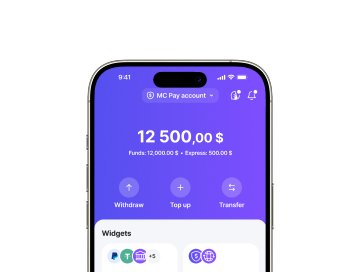
Revenue is paid through MC Pay, our fintech application that is already used by more than 10,000 partners worldwide. We support 80+ local currencies and 12+ withdrawal methods: bank cards, business accounts, PayPal, and cryptocurrency. We work with individuals, sole traders, self-employed, registered companies, and other legal structures. Every payment comes with an invoice and supporting documentation — fully compliant, fully traceable.
Who we work with
Web game developers with existing titles on CrazyGames, Poki, GamePix, or similar platforms. Mobile developers looking to port their titles to the web. Indie studios and solo developers at any stage. If your game fits the Playables format (web-compatible engine, no third-party SDK dependencies), get in touch with our team — we will tell you within 24 hours whether it is a fit and what the path to publication looks like.