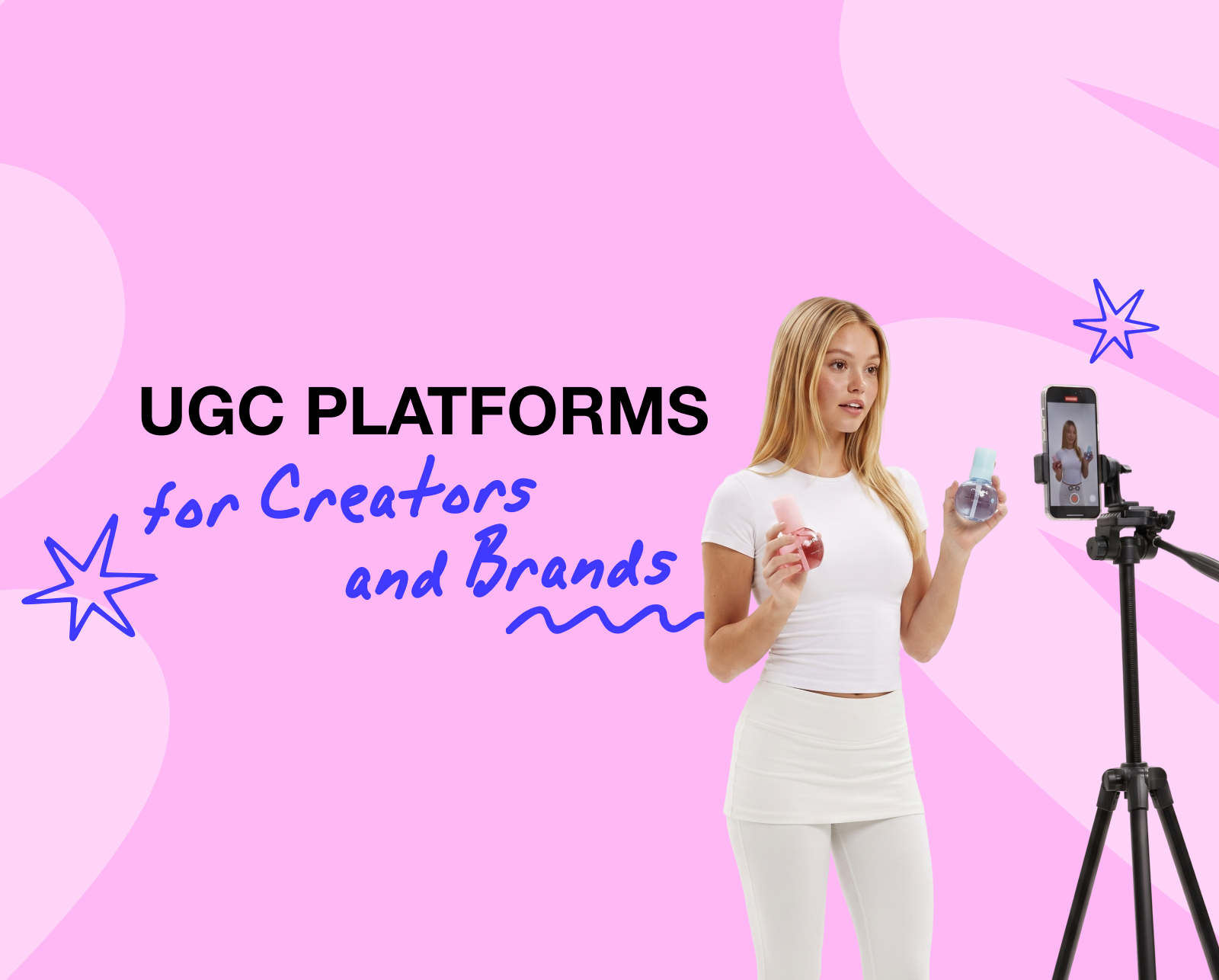
User-generated content (UGC) has changed greatly. It walked the way from being a marketing trend to becoming one of the few ways that brands can really establish trust, compel fans to get more involved, and drive more sales. The fact is that when consumers encounter genuine content made by actual people, they trust it more than the usual brand ads, making UGC a must-have in most modern marketing plans.
Whether a creator is just starting out with their first UGC campaign, looking to scale up social media ads, or building a long-term content strategy, the right platform can help out at almost every stage of the process: from finding and managing the right creators for collaborations to collecting content rights and measuring paid campaign performance.
In this guide, we've chosen the 10 best UGC creator platforms to be on the lookout for in 2026, comparing their features, pricing, and everything that helps you pick the influencer platform that makes the most sense for your business.
What Is a UGC Platform?
A UGC platform is a tool that helps brands and creators find authentic content. The content itself can vary depending on the platform, but it might include collaborating with multiple creators, running campaigns, getting content approvals, handling licensing rights, and spreading content across marketing channels. Rather than trying to handle everything in-house, businesses turn to UGC platforms to speed up the content creation process and still deliver the authenticity that audiences expect. UGC marketing spend is projected to hit $500 billion by 2027.
While the term “UGC platform” gets used broadly, not all of the places do the exact same thing. Some of them function as marketplaces that connect brands with many content creators. Others focus more on campaign management, content creation, customer feedback, or integrating with social commerce. Figuring out what each platform does is vital to picking the one that meets your marketing goals.
The best UGC platforms usually make it easier for businesses to:
- Find UGC creators fast.
- Manage outreach to creators and campaign workflows.
- Secure the right to use the content and get the necessary licenses.
- Produce high-quality, authentic photo and video content.
- Get communication and approvals directly in one place.
- Track how well your campaigns are doing and check creator deliverables.
- Re-use that same content across paid ads, websites, ecommerce sites, and social media channels.
Top 10 Best UGC Platforms
We carefully chose top 10 of the most popular, rapidly growing, and showing good results platforms that you might want to consider as a place to land.
1. Insense
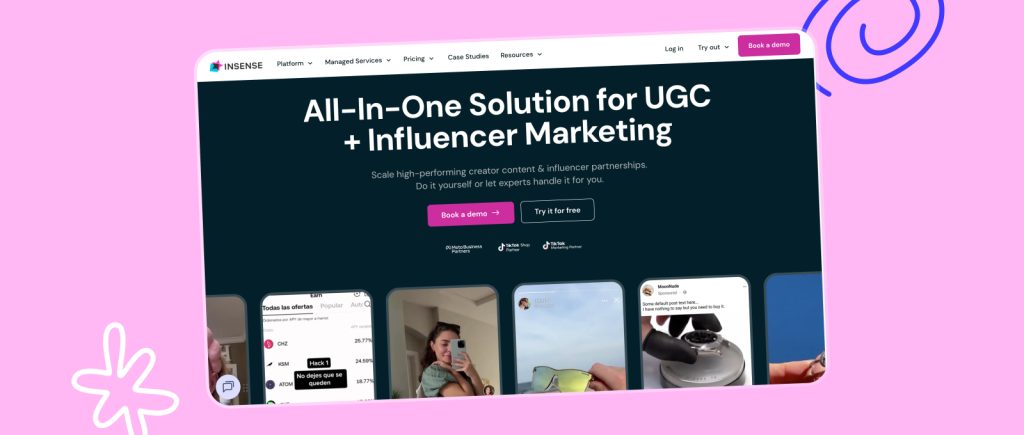
Category: Creator Marketplace & UGC Campaign Management
If you're looking for a platform that not only finds the right creators but also helps manage your entire UGC campaign from start to finish, then Insense is definitely worth checking out. As of today, they expanded into a comprehensive UGC solution that helps brands source high-quality, authentic content for paid social campaigns on all the major platforms like TikTok, Instagram, Meta, and more.
Insense's creator network is pretty big and they've got a good system for vetting creators and for brands, finding the right talent. Their AI-powered matching algorithm takes into account factors like niche, audience, content style, location, and budget. Once creators are found, Insense streamlines the workflow with sending the briefs and negotiating what they need to deliver, approving the final product, integrating with ad platforms and sorting out payments.
Pricing
Insense is a custom-pricing setup that is based on business goals and campaign volume. If you want to see how it works, you can book a personalized demo and quote, while creator compensation depends on project requirements.
Ups
- An excellent job of finding top-notch creators and having a vetting process.
- Focus on ad-ready content.
- The interface is perfect for managing campaigns.
- AI features simplify the working process.
- Suitable for businesses of all sizes.
Downs
- Premium features can get expensive if campaign volume grows.
- Mainly optimized towards social media campaigns.
- If you only occasionallycollaborate with creators, extra functionality might be more of a nuisance than help.
2. Cohley
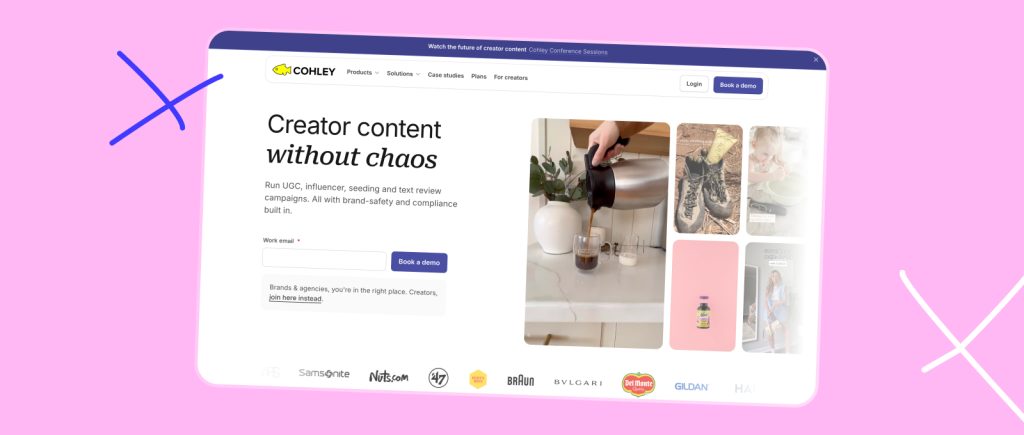
Category: UGC Content Management & Enterprise Creator Platform
Cohley takes a wider view by helping companies control the whole content process from spotting talent to analyzing campaign numbers. It lets brands set up new projects, get vetted creators, manage approvals, and operate with thousands of assets in a single workspace. The platform will accept pretty much any content type: product photography, short videos, testimonials, lifestyle visuals, and social media creatives.
One area where Cohley really comes into its own is in content organisation. Its asset library, tagging system and search tools all make it easy to track down, reuse and repurpose content across multiple channels. The platform also provides analytics, giving brands the power to compare creator performance, check campaign results and see which types of content are driving the highest engagement or conversions.
Pricing
Just like Insense, Cohley offers custom priсes, and if businesses are interested, they can request a demo.
Ups
- Excellent for handling big volumes of content.
- Asset organization and search capabilities.
- Strong analytics with useful data.
- Supports different content formats.
- Good fit for brands that want to run long-term UGC programs.
Downs
- Pricier than other marketplace-focused competitors.
- Better suited to established brands rather than start-ups.
- Can require more onboarding due to its feature-heavy setup.
3. Billo
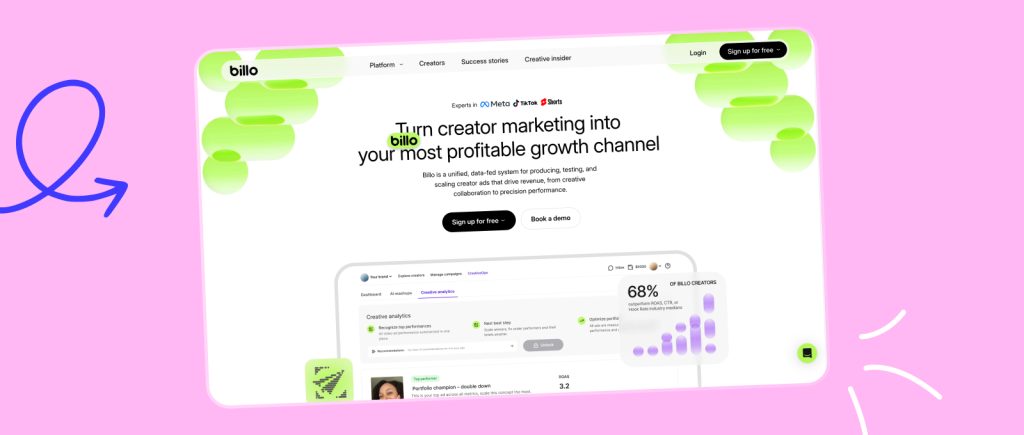
Category: UGC Video Marketplace
Billo's main selling point is just how easy it is to use, making it a very accessible user-generated content platform for all brands. Billo is a specialist in short-form video content. Brands send over a quick creative brief, send their product to a creator (if needed), and then get a ready-to-use video for social media platforms, ads, product listings and product pages.
The platform has a huge network of creators that produce video content across loads of different industries, from beauty and fashion to food, fitness, home goods, and electronics. Billo is also really keen on making ad creatives, so that many brands use it to make TikTok videos, Meta ads, product demos, testimonials and unboxing content. This focus on conversion-focused content is a big part of why it's so popular with ecommerce brands running paid acquisition campaigns.
Ups
- Super easy to use.
- More affordable than big enterprise platforms.
- Strong focus on short-form video content.
- Quick creator matching and delivery.
- Ideal for ecommerce brands running paid social campaigns.
Downs
- Focus on video content, not full-scale UGC campaigns.
- Limited campaign management features.
- Less suited for enterprise brands with a complex workflow.
Pricing
Billo offers transparent project-based pricing depending on their needs.
4. Collabstr
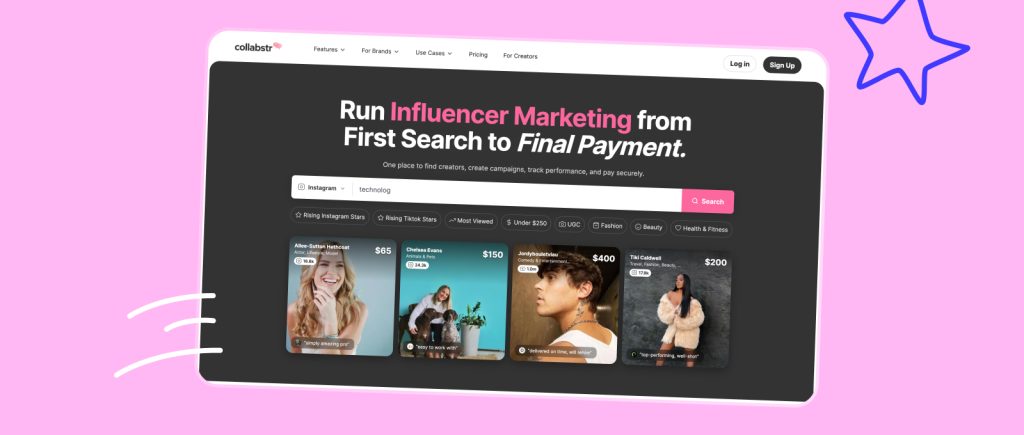
Category: Creator Marketplace
Collabstr nails one thing: helping brands find and hire creators in a transparent way. Being one of the biggest creator marketplaces, it lets businesses get direct access to thousands of influencers and UGC creators covering almost every niche. What sets Collabstr apart is the way it works. They let brands browse through creator profiles like they would on Amazon or any similar ecommerce site. These profiles have pricing, portfolio examples, information on their audience, platform stats, reviews, and services they offer.
While lots of the creators on Collabstr are influencers, the platform has recently expanded UGC offering. This means businesses can hire creators to produce engaging content just for them, without having to post it on their own social media channels. Collabstr supports creators across TikTok, Instagram, YouTube, Amazon, Pinterest, LinkedIn, Twitch, and other big social networks.
Now Collabstr provides useful tools like messaging, contracts, payments and project management, but it doesn't have the same level of automation or enterprise workflow features as some of the other platforms like Insense or Cohley.
Ups
- One of the biggest creator marketplaces.
- Price is transparent long before you get in touch with a creator.
- Hiring is fast.
- Wide range of industries and budgets.
- Easy for first-timer users.
Downs
- Limited in terms of campaign management for bigger businesses.
- Creator quality varies.
- Brands are still responsible for picking the right creators.
Pricing
Joining the platform is free, while creator pricing varies depending on experience, niche, and so on.
5. Flowbox
Category: UGC Management & Social Commerce Platform
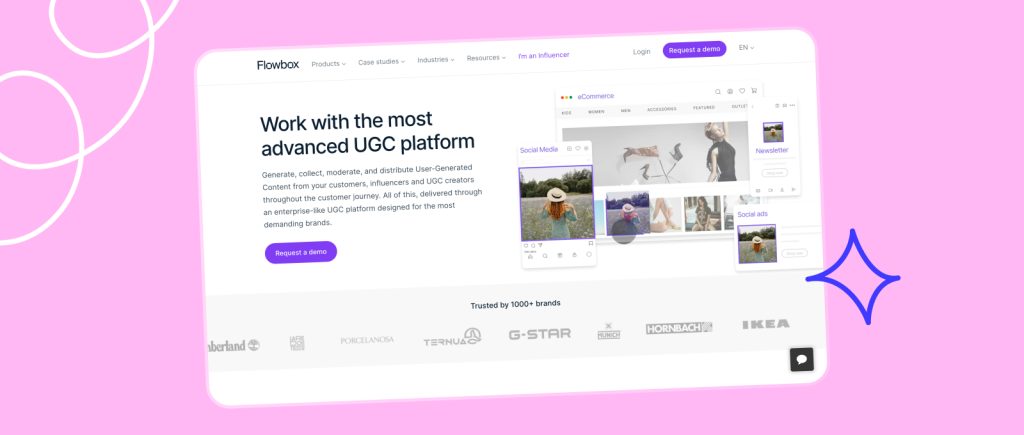
Flowbox is all about empowering brands to put to use UGC across the entire customer journey. The platform takes user-generated content, whether it's from social media, customers uploading directly, or from branded campaigns, and puts it into one central library where marketing teams can pick out what works, sort it, and publish it. Flowbox also works well with other ecommerce platforms: it lets brands display shoppable galleries, customer photos, and social proof on product pages.
Ever since it bought Dreaminfluence, Flowbox has also made it easier for brands to work with top influencers while still putting customer-generated content to work. However, its core still remains in making the most of customer content rather than creator sourcing.
Ups
- Top-notch ecommerce integrations.
- Tools for moderation and content organization.
- Helps increase trust and conversions with authentic customer content in a natural way.
- Perfect for retailers managing user-generated content.
- Supports both customer and creator-generated content.
Downs
- Not designed to find new creators in the first place.
- Better for brands with existing user-generated content strategy in their marketing plans.
- Might be a bit too much for some smaller businesses.
Pricing
Its pricing is based on business size, traffic volume, and feature requirements.
6. Trend
Category: UGC Production Platform
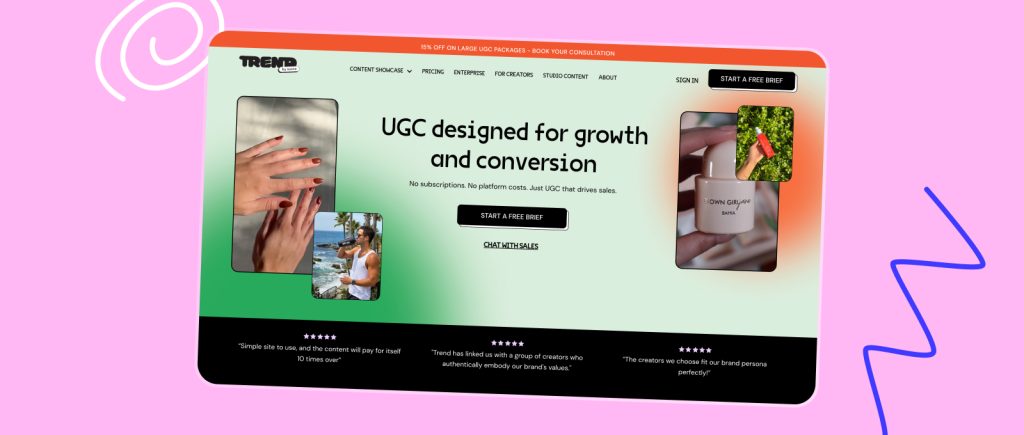
Trend provides top-notch content that brands can use across their paid ads, ecommerce sites, email marketing, and social media. The platform takes a thoughtful approach when matching businesses with creators. It starts with getting to know their product category, their brand identity, and what they're looking for creatively. This approach often results in a better content quality compared to the one found in open-to-all marketplaces, which is a perfect option for brands with high visual standards. They also focus on licensing content and getting the right to use it commercially.
Trend specializes in lifestyle and product-centric photography and video: lifestyle shots, product demos, unboxing videos, testimonial clips, and short-form content that's optimized for TikTok, Instagram Reels, and YouTube Shorts. Every project follows a pretty standard workflow.
Ups
- High-quality content throughout the platform.
- Brands save time searching for creators.
- Strong focus on brand consistency.
- The production process is well-organized.
- Ideal for premium consumer brands.
Downs
- The creator pool is smaller than on a marketplace platform.
- Brands have less flexibility when it comes to choosing creators.
- Better suited for quality-focused campaigns than high-volume production.
Pricing
Brands are offered customized pricing based on deliverables and content requirements.
7. JoinBrands
Category: Creator Marketplace
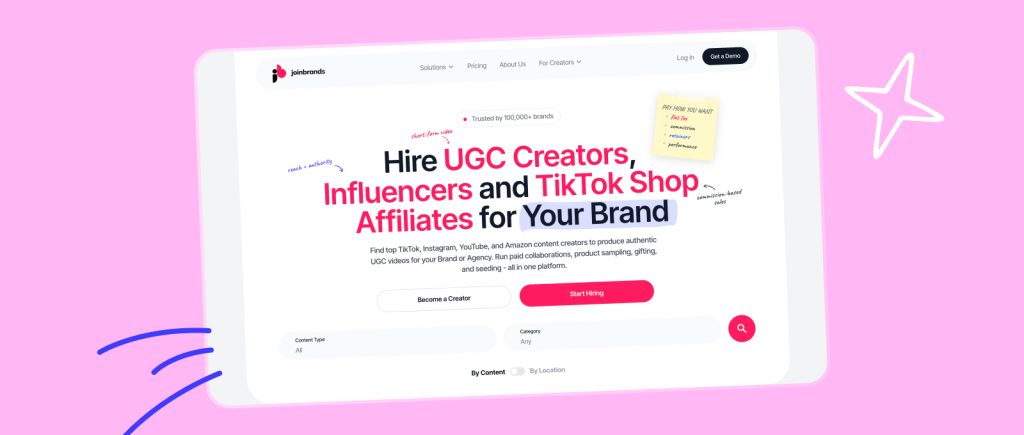
JoinBrands is here to help business owners produce original product content in no time. Their platform connects brands with talented creators, all of whom have been thoroughly vetted. Setting a campaign on JoinBrands is designed to be very simple: brands publish a project, creators apply, products are shipped if necessary, and completed content is delivered through the platform.
JoinBrands is famous for its fervent support for online retailers, especially Shopify sellers, Amazon sellers, and direct-to-consumer brands. Many businesses love using the platform to create Amazon product videos, ecommerce photos, paid social ads and customer testimonials that help build trust all along the buying journey.
While it doesn’t have deep campaign analytics or super-smart automation for complex workflows, JoinBrands' simplicity is a part of its appeal, especially for businesses that are still growing.
Ups
- Easy to launch new campaigns.
- Good prices for small and medium businesses.
- Ecommerce is their advantage.
- Large creator community.
- Everything gets done fast.
Downs
- Limited functionality.
- Not a lot of deep analytics.
- Not as suitable for running complex campaigns across multiple markets.
Pricing
There is flexible project-based pricing that varies depending on content type and creator requirements.
8. Creator.co
Category: Creator Marketplace & Influencer Marketing Platform
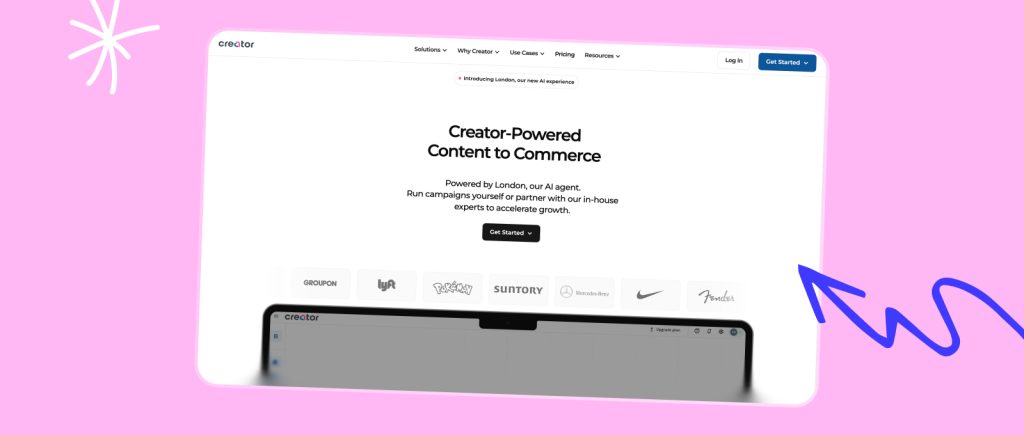
Creator.co brings together influencer marketing and user-generated content in one place, which is enticing for brands that need to run awareness campaigns AND produce content on the side, without jumping between different platforms.
Brands can use super detailed filters to find the right creators. Depending on what they're trying to achieve, businesses can either team up with influencers who reach their own audience or bring in creators just to produce content for their own channels. Beyond creator discovery, Creator.co offers campaign management tools, communication features, content approvals, analytics, and performance reporting.
Creator.co is a very flexible place. For example, a single campaign can combine influencer promos, product seeding, affiliate marketing, and UGC production all in one place.
Ups
- Combines influencer marketing and UGC.
- Has strong campaign management tools.
- Has different options to collaborate with creators.
- Has some useful analytics and reporting features.
- Supports long-term relationships with creators.
Downs
- Compared to some of the dedicated UGC platforms, this one is more complex.
- If you're new to all this, there's a bit of a learning curve.
- Learning curve for first-time users.
Pricing
Depending on campaign size and required platform features, there’s several pricing options.
9. Yotpo
Category: Reviews, UGC & Social Commerce Platform
Yotpo takes a customer-first approach when it comes to user-generated content. The platform helps businesses collect, manage, and showcase actual content from their actual customers. That's all about turning reviews, photos, videos and ratings into social proof.
Over time, it's developed into a full-on ecommerce platform. Brands can automatically send review requests after a purchase, encourage buyers to share product photos and videos, moderate submitted content, and then show that on product pages, in emails, and other marketing channels. It integrates with ecommerce solutions in a convenient way, making it valuable for Shopify, BigCommerce, and other online retailers.
The platform also adds in loyalty programs, referrals, SMS marketing, and email integrations, letting brands combine customer-generated content with retention and lifecycle marketing strategies.
Ups
- Their review management is convenient.
- Strong connection to the ecommerce ecosystem.
- Helps build trust and boost conversion rates.
- Easy to integrate with the major ecommerce platforms.
- Combines UGC with the tools for customer retention.
Downs
- Not set up to source creators for your content.
- Limited creator campaign management.
- Best for ecommerce businesses, but not for service-based brands.
Pricing
Tiered plans for businesses depending on their requirements.
10. Bazaarvoice
Category: Enterprise Reviews & UGC Platform
For global retailers and enterprise brands, Bazaarvoice has been one of the most well established names in user-generated content for a long time. Bazaarvoice collects, manages, syndicates, and distributes customer-generated content to some of the world's biggest retail networks.
One of the platforms defining strengths is its massive syndication network. Brands can publish customer ratings and reviews, photos and videos on their own e-commerce websites and at retailers’ as well, making customer content reach further and bigger.
Bazaarvoice also offers more advanced tools for moderating content and fraud detection, for analyzing and reporting, while getting meaningful insights from customer feedback. Besides reviews, the platform is also good at supporting visual UGC, social commerce initiatives, running sampling campaigns, and coming up with customer engagement programs.
Ups
- The retail syndication is on the industry leading level.
- Comprehensive moderation and fraud prevention tools.
- Enterprise-level analytics.
- Trust of global brands.
- Support for omnichannel commerce.
Downs
- Enterprise-level pricing too.
- Implementation is complex.
- Not built for creator discovery or influencer marketing.
Pricing
Pricing is offered in a custom manner based on the size of the business, retailer partnerships, and required platform capabilities.
Get a quick look at our summed up comparison table — it might help you to make a better decision based on main points.
| **Platform** | **Category** | **Best For** | **Pricing** | **Free Trial** |
|---|---|---|---|---|
| **Insense** | Creator Marketplace & Campaign Management | Paid social campaigns | Custom | No |
| **Cohley** | Enterprise UGC Management | Large-scale content operations | Custom | Demo |
| **Billo** | UGC Video Marketplace | Fast video production | Project-based | No |
| **Collabstr** | Creator Marketplace | Direct creator hiring | Creator-set pricing | Yes |
| **Flowbox** | UGC Management & Social Commerce | Ecommerce content activation | Custom | Demo |
| **Trend** | UGC Production | Premium branded content | Custom | Demo |
| **JoinBrands** | Creator Marketplace | Shopify & Amazon sellers | Project-based | No |
| **Creator.co** | Influencer + UGC Platform | Hybrid creator campaigns | Tiered plans | Demo |
| **Yotpo** | Reviews & Social Commerce | Customer reviews & retention | Tiered plans | Limited |
| **Bazaarvoice** | Enterprise Reviews & UGC | Global retail brands | Custom | Demo |
Choosing the Right UGC Platform for Your Business
The ideal UGC platform is a reflection of what you're trying to achieve with your marketing and how much you can afford to spend on it. Before you start looking, have a clear idea of what you're hoping to achieve.
1. Figure out what you really need
Some platforms focus on working with creators, some are more geared towards managing campaigns, and other platforms, like Yotpo and Bazaarvoice, are built around the importance of reviews and social proof.
2. What do you care about when it comes to creators?
More doesn’t mean better. Look for platforms that offer vetted creators, a decent portfolio, and transparency about their performance in the past. That way you can find someone who understands your brand.
3. Integrate your workflow
It's easy to get caught up in the idea of creating great content to run a successful UGC campaign. Think about features like campaign management, approval workflows, content licensing and how your team is going to work together.
4. Experiment with the tools you already use
If you're using tools like Shopify or Meta Ads, you want a platform that speaks the same language as you. In other words, if a platform has native integrations with the tools you use, it's going to be easier to get everything to work together.
5. Think about what you're going to need next
Choose a platform that not only meets your current needs, but will suit you as your business will grow further. Can it handle bigger campaigns, more creators and more content? If yes, then it’s just for you.
In the end, the right UGC platform is the one that makes it easier for you to create authentic content that drives real results.

Learn more
Want to Grow Faster on YouTube? Get a free channel audit from Mediacube experts. Identify what’s holding you back and receive a clear action plan to boost your growth. [Get a Free Audit](https://mediacube.io/form?page=&form=welcome)
[Get a Free Audit](https://mediacube.io/form?page=&form=welcome)Picking a Place for Your Business to Grow
User-generated content has become the most effective way for brands to build trust, boost engagement, and drive sales, but coming up with and managing loads of UGC at scale needs the right tools, and preferably in one place.
Rather than looking for some sort of "best" platform try defining what you need first. After all, the definition for the best differs between people. Think about what type of content you need, how your team works, what your budget is, and how you plan on using all that UGC in your marketing.
If you are a creator who needs to navigate a complex, but definitely exciting world of content creation and wants to grow faster and more efficiently, now is the time to consider Mediacube as your partner on the road to becoming successful.
FAQ on UGC Platforms
Here is a collection of the most popular questions that people ask while searching for the best platform that meets their needs.
What is the best UGC platform?
There isn't one single best UGC platform that will suit every business, the best one for you will depend on what you're trying to achieve. For example, Insense is a great choice if you're looking to run paid social campaigns, while Cohley is ideal for managing content on a bigger scale.
Are UGC platforms free?
The truth is, most of the good UGC platforms are paid for. Some of them will give you a free trial or demo to try out before you commit, while others will charge you on a project-by-project basis.
What's the difference between UGC platforms and influencer marketplaces?
A UGC platform's job is to produce content that brands can use across their own marketing channels, regardless of whether the creator has many followers or not. Influencer marketing platforms are mainly there to help brands find creators with a big following to publish sponsored content to their followers. Some platforms like Creator.co and Insense do a bit of both.
Can small businesses use UGC platforms?
Absolutely! Many platforms offer a pricing model that's project-based, so it's pretty accessible for startups and small ecommerce brands on a limited marketing budget. Places like Billo, JoinBrands, and Collabstr are all well-suited for small businesses.
How much does a UGC platform cost?
Pricing varies between platforms. Some of them charge per piece of content on a project basis, while others have custom pricing based on how many campaigns you run and other factors. Also, there are the platforms that offer subscription plans with extra tools for collaboration and analytics.
Do UGC creators need a large following?
Not at all! Unlike influencers, UGC creators are hired to produce good content not because they have a huge following. Lots of successful UGC creators have a relatively small following or rarely publish on their own socials.
Which UGC platform is best for Shopify brands?
If you're a Shopify merchant, JoinBrands, Flowbox, and Yotpo are all strong options. JoinBrands is all about product content from creators, while Flowbox is great for showing off your UGC across ecommerce platforms, and Yotpo does reviews, visuals, loyalty programs, and retention marketing in one platform.