You have probably noticed how Shorts suddenly turned into one of the fastest-growing drivers on YouTube. At first, it was just a reaction to TikTok’s explosion of vertical video, but YouTube Shorts has since morphed into a good way for discovering new content and making money. According to the data, Shorts now rack up tens of billions of views every single day, making them one of the platform’s most powerful formats for new creators to break out.
But while the scale is certainly impressive, many creators are still scratching their heads about the rules for making money on Shorts on YouTube. Yes, they can earn, but only if you meet the right conditions. In this guide, we’ll take a closer look at how Shorts actually work, what requirements you have to follow, and what it really takes to hit the 10M view threshold quickly.
How YouTube Shorts Monetization Actually Works
Monetizing for Shorts is a different game to traditional YouTube videos. With long-form videos, ads pop up after the video’s uploaded, during its playback, or right before it starts. The creator who uploaded a particular video then takes a share of the ad revenue that gets generated from those ads.
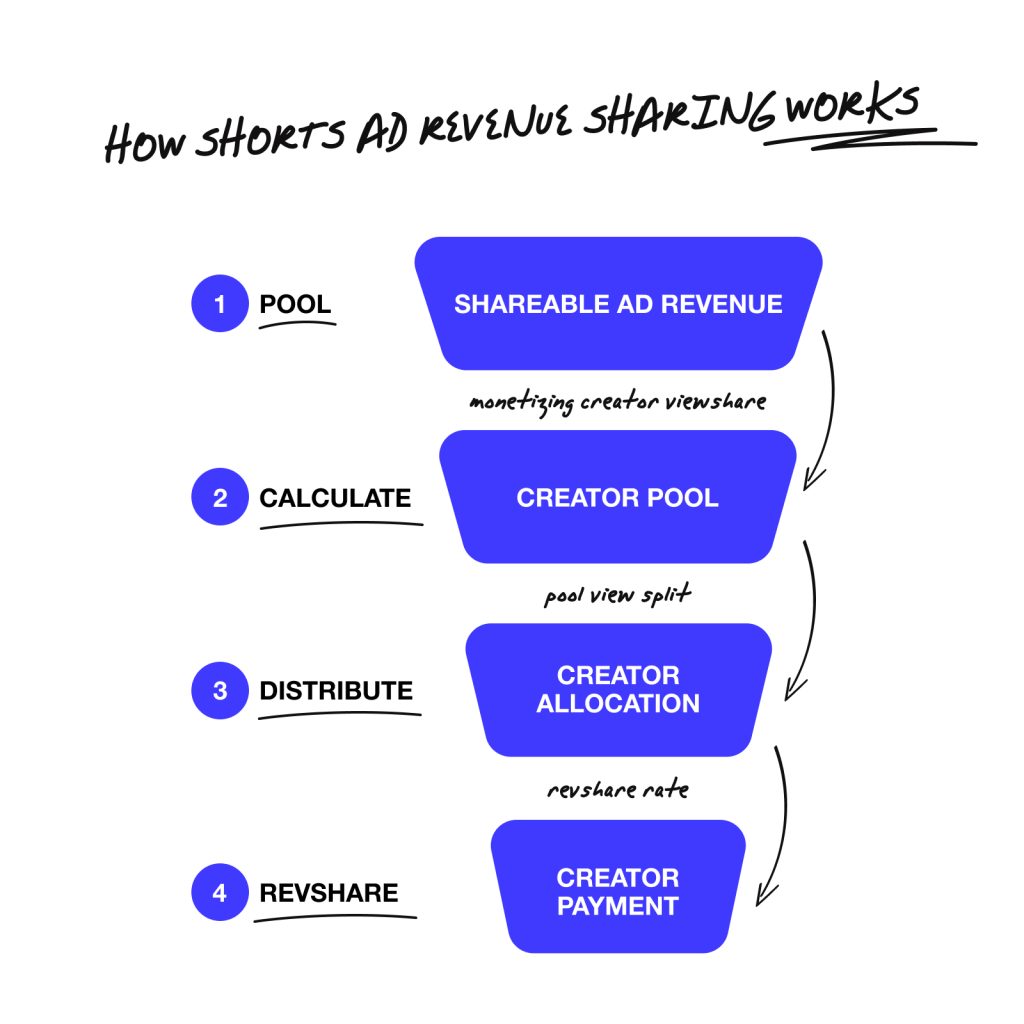
But Shorts do things a little differently. They use a shared ad pool model, so instead of placing separate ads in each Short, YouTube just shows one between different videos in the feed. The cash from those ads all gets into a pool, then gets divided up among creators based on how many of their clips people end up watching in total.
Before creators get their share, YouTube takes out the music licensing costs. Then the remaining cash gets split with the creators. They get 45% of the allocated revenue.
| **Metric** | **Shorts** | **Long Format** |
| Ad placement | Ads shown between videos | Ads directly on the video |
| Revenue model | Shared ad pool | Individual revenue |
| Creator share | 45% | 55% |
| Kay metric | Total views | Watch time + views |
This means that Shorts are a volume-driven way to make money. With that difference between Shorts and long videos, you might think Shorts can’t compete, but the reach they have can still rake in a decent amount of cash at scale.
YouTube Shorts Monetization Requirements
To earn from Shorts, creators need to first get accepted into the YouTube Partner Program (YPP). It gives them access to ad revenue sharing and a few other monetization features. There are two different pathways to qualify, and only one of them relies entirely on Shorts views.
The first path is designed for Shorts enthusiasts. If you’re focused mostly on them, you need to have at least 1,000 subscribers and 20 million valid public Shorts views within the last 90 days. The second path is more traditional. It follows the same old YouTube monetization rules. You can still qualify with 1,000 subscribers and 8,000 valid public watch hours in the last 12 months if you’re posting a mix of different formats.
One important thing to keep in mind is that time spent watching Shorts doesn’t count towards the 8,000-hour requirement. Only long-form videos count for that one.
What Counts as Valid Shorts Views?
Not every view is a view when it comes to meeting the requirements to monetize your YouTube Shorts. YouTube looks at a few key things before deciding whether to count those views towards the eligibility criteria. To find out more how YouTube counts views, dive in our article on a thorough dissection of its functioning.
Valid views usually come from:
- Videos that are available to see on your channel, not hidden by the privacy settings or deleted;
- People finding your content naturally — for example, in YouTube’s recommendations;
- Original content that you created, or at least some creativity is involved when you use AI content.
It’s also worth noting that YouTube’s not a fan of content copying someone else’s work without putting in the effort to make it your own. You see this with channels that upload movie scenes, TV clips, or social media posts. Even if they rack up millions of views, it’s all for nothing if they don’t have any originality.
Channel Compliance Requirements
Besides getting a certain number of subscribers and views, you also need to make sure your channel meets all the guidelines before YouTube will give you monetization approval. First off, you need to follow the rules of YouTube’s Community Guidelines. It means not violating the advertiser-friendly content policies. If you have a track record of copyright strikes, you might not qualify for the YouTube Partner Program.
There are a few other technical moments to keep in mind. For starters, your channel should probably be at least 30 days old. That way, YouTube knows you're not a fraud of some kind. You should probably have two-factor authentication switched on to keep your account safe. And also, don’t forget to link up an approved Google AdSense account so you can get paid when the monetization begins. When you have all this in place, you can rest easy knowing your channel is good to go in the advertising game.
The YouTube Shorts Fund: One More Way
Before handing out revenue sharing for Shorts, YouTube came up with the Shorts Fund, basically a bonus scheme that gives creators a little extra option to earn. Rather than giving them a cut of the ad cash, YouTube just sends out a monthly check based on how many views those videos get, how much engagement they have, and where in the world the viewers are from.
The bonuses can vary wildly, ranging from around $100 to a pretty impressive $10,000 a month, which all depends on how well you’re doing. But unfortunately, you can only be part of this special program if you live in certain countries, like the United States, the UK, France, Germany, Brazil, Mexico, and Canada.
To be eligible, you usually need to have a bit more than you would for the YouTube Partner Program. Think around 10,000 subscribers and approximately 100 million Shorts views within 180 days. That’s why most creators have already entered the YouTube Partner Program monetization thing by the time they get to this.
How to Qualify for Shorts Monetization Faster
Reaching the 10 million Shorts views in just 90 days can seem a daunting task. But the thing is, Shorts behave totally different to your standard YouTube videos. As you know, the time limit is now 3 minutes. One single viral clip can rack up hundreds of thousands or even millions of views overnight. It’s crazy how quickly that happens! Creators who manage to hit the monetization mark usually have a strategy going on, rather than just posting randomly. And don’t forget how perfect Shorts are for a cross-platform promotion strategy.
One of the smartest ways of doing it is building a content series. When viewers get to know what to expect from a particular theme or format, they’re more likely to come back for more and even subscribe:
- educational miniseries,
- daily challenges,
- or storytelling ideas do particularly well in the feed.
Another major factor is getting people to stay. The YouTube Shorts algorithm loves videos that people not just fall for a creative YouTube Shorts thumbnail and a title, but stay and watch right to the end. So if viewers are swiping away after just a few seconds, the algorithm quickly loses interest in that video. The first moment counts. A strong hook, whether it’s a surprising statement, a quick sketch, or a question that gets them curious can help drive those completion rates up.
Consistency also plays a big role in all of this. In our partner analytics over at Mediacube, we’ve seen that channels posting up Shorts regularly have a much better chance of getting the algorithmic momentum going.
Lastly, creators shouldn’t just forget about subscribers. Even if a channel is racking up millions of views, you still need at least 1,000 subscribers before you can start earning. Little calls to action, a cliffhanger at the end, or just some good conversation in the comments can all help get those casual viewers to become actual subscribers.
How Much YouTube Pays for Shorts
Shorts earnings can differ pretty wildly when you consider things like where your audience is located, what kind of niche you’re in, and how much demand there is from advertisers. The key thing to bear in mind is that creators get paid based on the percentage of the views in their region they’re getting.
When it comes to Shorts RPM in 2026, the obvious fact is that it is lower than long-form video RPM. For example, several dollars per thousand views for long videos versus around 10 or 20 cents per thousand views for Shorts. Still, the sheer scale can make up for that in a lot of cases. Even if a video only earns a few cents per view, if it gets millions of views, that can still add up to real money.
Another thing to keep in mind is that the geography of your audience has a big impact on how much money you’re going to make. If you’re getting views from places where people are willing to spend a lot on advertising, like the US, Canada, and Western Europe, that’s going to be more beneficial than views from places that are a lot cheaper to advertise in, like India.
If you want to know how much money you might be making from Shorts, there are tools like our YouTube Money Calculator that can help! These tools let you estimate your potential earnings based on view counts and what kind of CPM or RPM you can expect to get. They can be super helpful for figuring out how your Shorts performance is going to translate into actual cash.
Shorts Ad revenue is pretty low per view but it scales quickly as the volume goes up. In 2026, you can count on making around $0.01 to $0.05 in ad money for every 1,000 views, roughly breaking down to:
- $0.10 to $3 for every 10,000 views;
- $1 to $30 for every 100,000 views.
Of course, actual earnings can vary a lot depending on where your audience is from, what your niche is, and the overall quality of your content. When you’re analyzing a channel’s growth from a financial perspective, the picture can look something like this:
- Small creators with between 1,000 and 10,000 subscribers usually make around $20 to $500 a month;
- Mid-tier creators with 10,000 to 100,000 subscribers are looking at around $500 to $5,000 a month;
- Top creators with over 100,000 subscribers can make up to $50,000 a month.
The one thing to remember is that Shorts ad money is all about volume. You’re unlikely to make any real money from just one video, it's all about consistently getting a lot of views.
What to Do if You Are not a Member of the YPP yet?
Joining the YouTube Partner Program is not the only way to earn money. Many creators start earning way before they hit the official monetization targets. Here are some practical ways to do this.
Brand Collaborations and Sponsored Shorts.****Brands team up with creators who have highly engaged niche audiences, even if those creators only have a relatively small channel. A quick mention of a product, a demo, or just a reaction can be enough to get that brand on board with a sponsored deal. Micro-influencer partnerships are particularly popular in niches like tech, beauty, fitness, and productivity.
Affiliate Recommendations.****Shorts are perfect for quickly showing off a product or doing a mini-review. By sharing a tracked affiliate link in the description or as a pinned comment, you can earn a slice of any purchases/actions made through that link. They are a great way to recommend products, tools, or services. So if you’re interested in trying this method, you can join our affiliate program.
Redirecting Viewers to Paid Content.***Many creators think of their Shorts as a kind of discovery engine that sends people on to other monetized bits of their business, like long-form videos or premium courses. A single viral short can send thousands of people to your merchandise page or a paid community. Also, you can redirect your fans to Boosty or Patreon* for paid extra content.
Promoting Your Services.****Short-form video also makes for a killer portfolio tool! Designers, editors, coaches, and musicians use Shorts to do a quick showcase of their work and then direct viewers to a website.
Getting Paid by Your Fans.****And finally, you can invite your viewers to support you directly through platforms like Ko-fi or Patreon. Throw a genuine, clear CTA in the video description or pinned comments, and you’ll be amazed at how willing your loyal viewers will be to contribute.


Learn more
Want to Grow Faster on YouTube? Get a free channel audit from Mediacube experts. Identify what’s holding you back and receive a clear action plan to boost your growth. [Get a Free Audit](https://mediacube.io/form?page=&form=welcome)
[Get a Free Audit](https://mediacube.io/form?page=&form=welcome)Common Shorts Monetization Mistakes
Many creators struggle to start earning because they’re making common mistakes rather than because the thresholds are out of reach. It’s never out of reach for everyone.
- Pursuing views.
One of the most common problems is getting so caught up in chasing views that you forget about subscribers altogether. Sure, viral YouTube Shorts can bring a huge spike of traffic, but unless you can turn those views into actual people who’ll stick around for the long haul, you’ll never get to the point where you qualify for the YouTube Partner Program.
- Reposting with no creative touch.
Another mistake is taking content from other platforms and just reposting it without putting any real thought into how to make it original. It might get you a few temporary views, but it’s not what YouTube is looking for when it comes to monetization.
- Deleting old videos.
Some creators also go and delete their older clips because they don’t perform as well as they had hoped, which is wrong, and there’s a reason why. Sometimes those older videos are actually the ones that start picking up steam later on, once the algorithm has had a chance to test them out with a new audience.
The best way to avoid all these traps is to pay attention to how things are going. YouTube Studio gives you the key numbers you need to keep track of:
- subscriber count,
- watch hours,
- and Shorts views over the last 90 days.
If you’re looking for a bit more guidance on how to make progress, consider working with a partner network like Mediacube. We can give you useful insights into your analytics, as well as provide help with working out a YouTube Shorts monetization strategy, and give you faster access to some of YouTube’s tools.
FAQ on YouTube Shorts Monetization
Shorts monetization is a real deal. To sum up the key points that help you start earning, we gathered these questions to navigate you through the sea of information.
Can you make money from YouTube Shorts?
Yes, creators can earn once they join the YouTube Partner Program. Once you get approved, the views start counting towards a share of the Shorts ad cash pool.
How to monetize YouTube Shorts?
Firstly, to monetize Shorts, you'll need to meet the YPP requirements, which basically means you need at least a thousand subscribers and 10 million valid Shorts views over the past three months (or the usual 8,000-watch-hours way). Once you've gotten approval to join the YPP, you will be allowed to earn.
How much does YouTube pay for Shorts?
Your earnings are going to vary greatly depending on where your audience is from, what advertisers are willing to pay at the time, and how many views you have. And since it's all coming from a shared ad pool, what you get paid can change from month to month.
What are the requirements for the minimum length of YouTube Shorts for monetization?
There is no minimum length that's required if you want to make money off Shorts. As long as you have what YouTube considers a valid Short, following their rules, the video will start earning once your channel is part of the YouTube Partner Program. The optimal length is considered to be up to 60 seconds.
Can I monetize a channel posting Shorts from TV shows?
Usually, you can’t. Uploading bits from movies, TV shows, or any copyrighted videos will probably be considered a violation of policies. If you just take clips from shows and upload it without permission from the authors, you are likely to get a strike from YouTube. And with keeping doing this, you can even lose your channel.
So You Want to Get Paid for Shorts?
YouTube Shorts have genuinely changed the creators' game. Just a few years ago, it was a little discovery feature, and now it's a genuine way to make money if you are willing to do the necessary work and put in the time. You need to get your head around the YouTube Shorts monetization rules, but the next step is to create some sort of strategy that gets views, rakes in subscribers, and keeps YouTube happy with the eligibility of your content.
For anyone serious about scaling their channel up, keeping track of progress and constantly tweaking things so they get better is essential. With the right plan and support from Mediacube, that 10 million view barrier might not be so far away as it looks at first.