The rise of Shorts gave YouTube a whole new look, right? What once was a platform dominated by lengthy tutorials, vlogs, and documentaries is now bursting with a massive range of vertical clips, all made with the mobile user in mind and designed to be devoured with the swipe of a finger. Today, YouTube Shorts are reaching an astonishing200 billion daily views. The average engagement rate is 5.9%, which is higher than TikTok (5.75%) and Reels (5.53%).
Short-form clips have turned out to be a powerhouse of a discovery tool for creators, putting them in front of millions of viewers in a matter of hours, and often literally overnight. But on the other hand, long formats are still the foundation of YouTube’s video economy. They get viewers to stick around, they help build strong relationships with your audience, and most importantly, they’re the source of most of the money from ads that creators get, which makes them an important part of the game.
At this point, many creators are stuck with the same old question, “Is it better to focus on making Shorts, or concentrate on longer videos?” The debate is no longer one of either/or. It’s now all about using both and using them in the right combination to drive growth. By 2026, the most successful channels no longer treat these different types of content as a competition or a choice, but rather as two different tools in their growth plan.
In this guide, we’re going to take a close look at where Shorts and long videos stand in terms of algorithm performance, making money from them, engagement levels, and other factors that will help you build a long-term growth strategy.
How the YouTube Algorithm Treats Shorts vs Long Videos
The YouTube algorithm ranking factors are based on seeing short-form and long-form content as two completely different things because people interact with them in completely different ways, and therefore, monetization criteria for a YouTube channel might vary. For creators trying to get their head around those two formats, reading these signals will be key to success.
When it comes to Shorts, the algorithm is looking at:
- whether viewers stick with the video till the end or just give up in the first seconds;
- how often users immediately dismiss the video;
- if people are coming back for more;
- how quickly those views start growing.
And one thing that’s working in Shorts’ favor is the scroll-based discovery feed. YouTube is throwing every new video out there and watching what responses it gets. So even a small channel can suddenly have its content shown to a massive audience and make some real change.
When it comes to long forms, YouTube is all about:
- getting people to watch from start to finish;
- keeping them hooked after they’ve watched your video — if they're still around 10 minutes later in a 15-minute video, you must be doing something right;
- how many clicks you get on the video in the first place;
- how trustworthy you are in your topic of choice.
Long videos generally do pretty well in the traditional recommendation system, which is all about keeping people engaged for as long as possible. When it comes to this kind of content, the presentation is crucial, that’s why the packaging is important. Check out some of the best YouTube thumbnail examples, and you’ll get a glimpse into what kind of visuals drive people to click.
That’s why you often find yourself chasing two goals which are at odds with each other: 1) getting your content seen sooner; 2) keeping people as your permanent audience.
YouTube Shorts vs Long Videos Monetization: Which Format Earns More in 2026?
Monetization is one of the main factors that decides which format creators go with when choosing between different YouTube options.
How Shorts Monetization Works
When it comes to YouTube Shorts monetization, thecash comes from the YouTube Shorts ad revenue pool, which is the money that ad earnings from the Shorts feed get split up among creators based on the number of people who watched and interacted with the videos.
Since ads aren’t actually placed inside individual Shorts, the way the money gets paid out is a bit different from how it works with regular YouTube ads. Typically, the average sum that Shorts can generate is between $0.02 and $0.07 per 1,000 views. According to Shorts monetization requirements, that means you need millions of views to make a decent amount of money from Shorts on its own.
But here’s the thing: Shorts are still helping creators out in other ways that don’t directly bring in cash. They’re helping creators get new subscribers super quickly, reach new audiences, and get brand partnerships, but to keeping this under control, you need also to monitor how your Shorts RPM is doing.
How Long Videos Make Money
Long-form videos are where the most money is on YouTube. You can earn from long videos by using YouTube monetization methods:
- AdSense advertising;
- ads in the middle of your video (mid-roll);
- channel memberships;
- sponsorships with brands;
- affiliate marketing.
Because long videos give you more opportunities to stick ads in, naturally, you can make way more money off them. Typically,CPM values (cost per 1,000 views) range from $2 to $20+ , depending on what your content is about, who your audience is, and how much advertisers will pay for that. That’s why, when it comes to talking about reliable income, long videos are the clear winner.
Video Performance: What Matters Most for Each Format
The performance metrics for each format are actually pretty different.
For Shorts to be a success, they need to:
- grab viewers’ attention fast;
- keep viewers from switching off till the very end;
- have some replay value;
- get that initial momentum going.
For long videos to do well, they need to:
- keep viewers around for as long as possible;
- keep viewers coming back for more;
- build trust with their audience and make them loyal.
Best Video Length for YouTube in 2026
Creators are always asking: what video length is best for YouTube? Well, the truth is there’s no suitable answer for everyone. But looking at the data gives us some idea!
- Long Videos
For long-form content, the best video length on YouTube is pretty diverse. Typically, the best lengths tend to be:
- commentary: 8-15 minutes;
- tutorials: 12-25 minutes;
- storytelling: 10-20 minutes.
These lengths give you a chance to keep your viewers engaged without boring them, while also allowing you to throw some mid-roll ads in. Length is a factor than some people can overestimate when thinking about long-form RPM improvement.
- Shorts
Shorts work best when they deliver information quickly and get the job done fast. Some of the most successful ranges are:
- 20-30 seconds;
- up to 60 seconds.
Videos that are shorter are more likely to get watched all the way through, and even get replayed, which helps your algorithm rankings. In order to understand how your videos are doing, check Average View Duration from time to time.
When Shorts Work Better Than Long Videos
But let’s explore it a bit deeper. Even though long videos tend to bring in more cash, there are definitely times when Shorts can have the upper hand.
- When launching a new channel: Shorts make it easier to reach a large audience, even when you’ve only just started and don’t have any subscribers yet.
- When testing out new content ideas: Shorts can give you a chance to see if your ideas are a hit before investing the time and effort into a full-length video.
- When covering trending topics: Short videos tend to do a lot better when it comes to trending topics, memes, and viral moments.
When creators are weighing up the pros and cons of a certain strategy, they often go for Shorts because they’re so quick to produce and easy to experiment with.


Learn more
Want to Grow Faster on YouTube? Get a free channel audit from Mediacube experts. Identify what’s holding you back and receive a clear action plan to boost your growth. [Get a Free Audit](https://mediacube.io/form?page=&form=welcome)
[Get a Free Audit](https://mediacube.io/form?page=&form=welcome)YouTube Shorts vs Long Videos: Key Differences Creators Must Understand
In order to better see the core differences between Shorts and long videos, let’s compare them across key metrics.
| **Metric** | **Shorts** | **Long Format** |
| **Typical length** | Up to 60 seconds | 8–25+ minutes |
| **Discovery method** | Shorts feed | Search and recommendations |
| **Viewer behavior** | Fast scrolling | Focused viewing |
| **Monetization model** | Shorts revenue pool | AdSense + mid-roll ads |
| **CPM potential** | Lower | Higher |
| **Production complexity** | Lower | Higher |
This comparison is why the majority of creators won’t put all their hopes on just one format. What they do instead is come up with a multicomponent approach where each format has its own unique part to play in helping their channel grow.
Examples of Successful Cases
There are loads of creators out there who managed to create a pretty killer strategy that combines different content formats in a really effective way. Educational channels often use their Shorts to try to pull viewers in, with a little teaser taken from a longer tutorial they published somewhere else. Entertainers love to use Shorts as a way to share the funny bits from a longer video.
But you probably know a lot of creators who like combining their formats, right? Below, we explore those brave creators who decided to stick to just one type and follow it thoroughly through. Let’s find out what they got in the end.
Examples of Successful Cases Only With Shorts
Khaby Lame
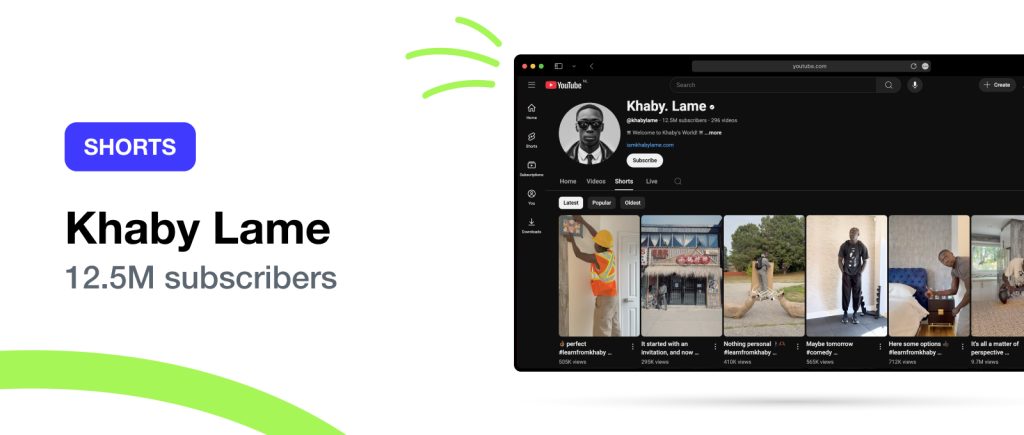
Khaby initially made short-form content his trademark. His sincerity and simple delivery made him a star even before Shorts came along, but here, too, he succeeded like no other.
Daniel LaBelle
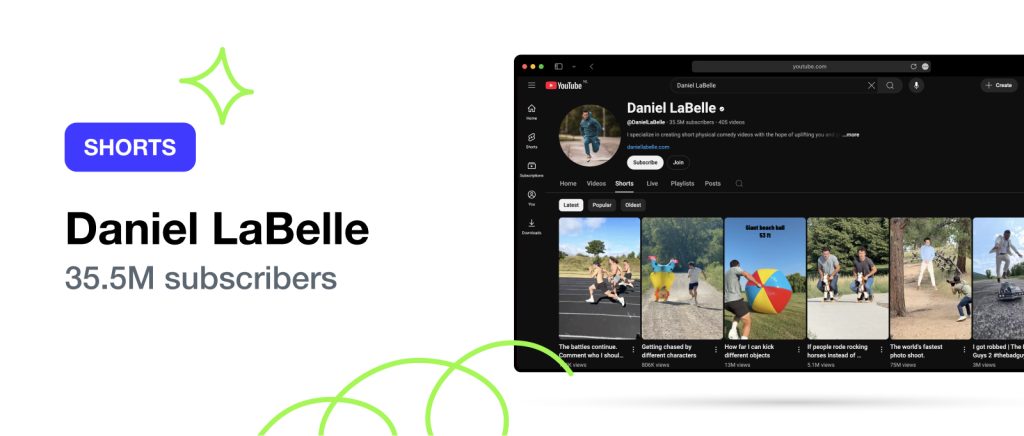
He may not break Usain Bolt’s records, but… who knows? Daniel’s ironic delivery made him a star VERY quickly.
Zach King
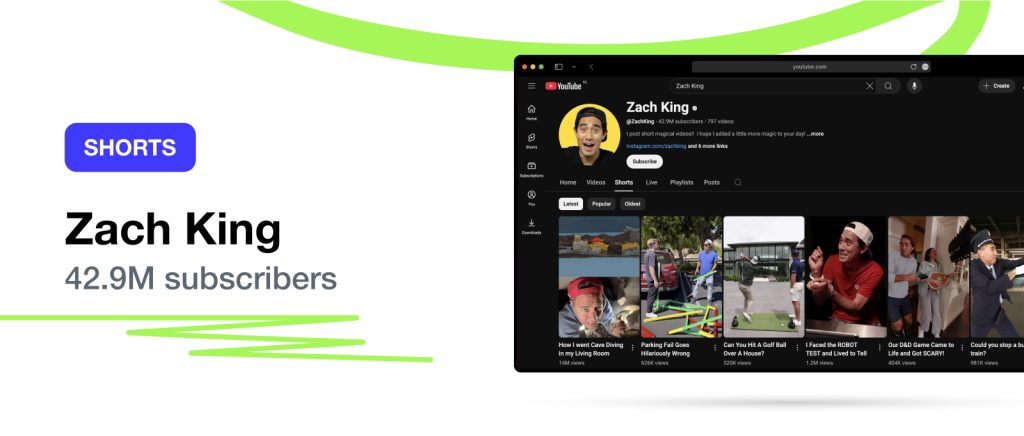
A real classic creator of short videos, who started his career back in the prehistoric days of Vine. If you want a bit of an old-school vibe, he is the successor to the traditions of Oscar winner Zbigniew Rybczyński.
Examples of Successful Cases Only with Long-form Videos
MrBeast
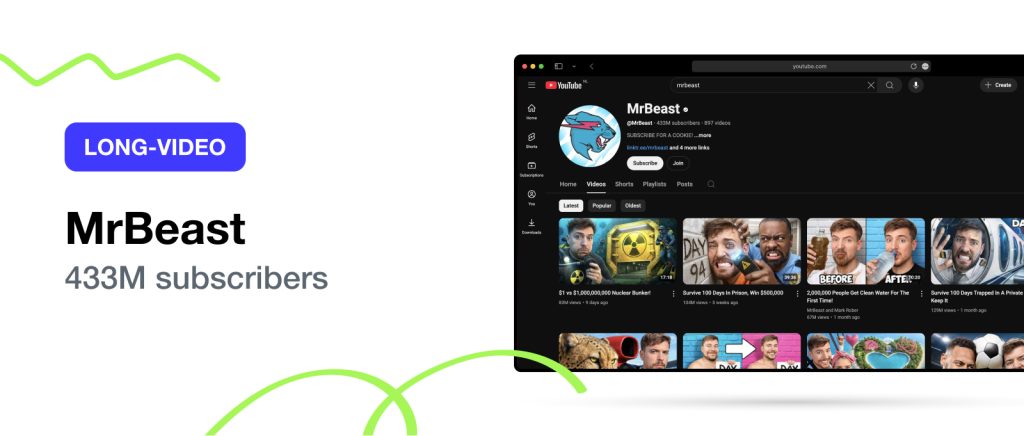
We believe this case speaks for itself. Jimmy showed how perseverance and hard work can lead to global success, and now it’s hard to find anyone on the planet who doesn’t know his name. But he started out by counting to 100,000 on live streams.
Mark Rober
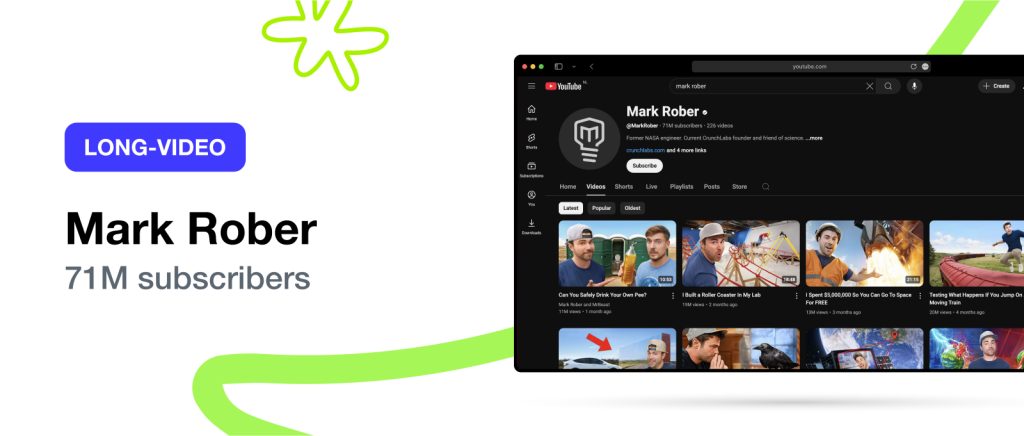
Mark is a former NASA engineer who decided to leave space exploration and focus on showing on YouTube how science works. Water cannons, elephant toothpaste, parcel thief traps — anything you can think of.
Ryan Trahan
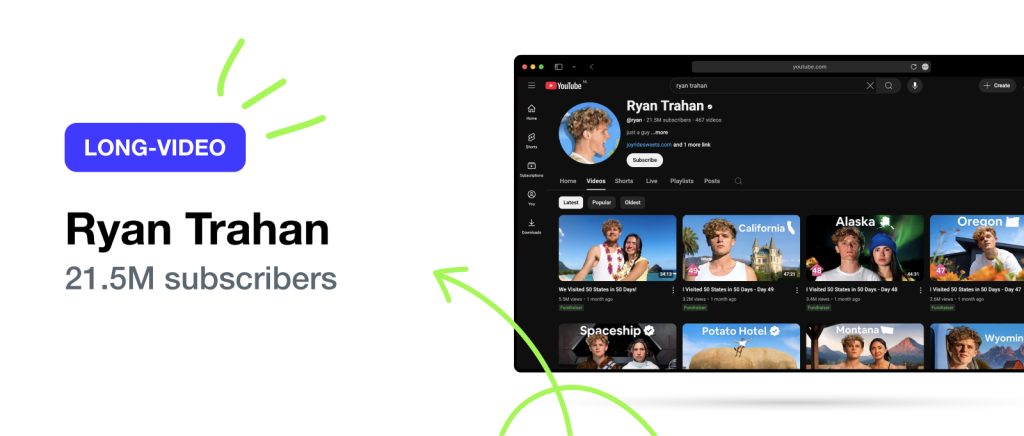
Ryan is great at telling stories, such as “how to survive with 1 cent in your pocket” or “visit all one-star restaurants.” We appreciate him precisely for being so sincere in everything he does.
Ryan is great at telling stories, such as “how to survive with 1 cent in your pocket” or “visit all one-star restaurants.” We appreciate him precisely for being so sincere in everything he does.
Why Smart Creators Combine Short-Form and Long-Form Video Content
Those who aim at becoming a hit in 2026 mix both forms into one coherent strategy and a cohesive content ecosystem. A pretty standard growth recipe looks like this:
Shorts → getting attention → a long video → a subscriber
The basic idea is this: Shorts get people interested and introduced to the creator. If the content really hits the spot, those viewers end up falling deeper and checking out the longer videos where they can get more hooked on the channel.
Another strategy that works is content repurposing. You can take one long-form video and split it up into:
- several snappy little Shorts;
- teaser pieces to leave viewers wanting more;
- social media highlights: small versions to easily get shared.
This seriously widens the visibility. For many channels, this approach takes care of the core problem in one move. And if you need to extract tags from one video and, for example, transfer it to another, use a YouTube tags extractor for a quick access.
The Next Chapter of YouTube Formats: Mediacube’s Prediction
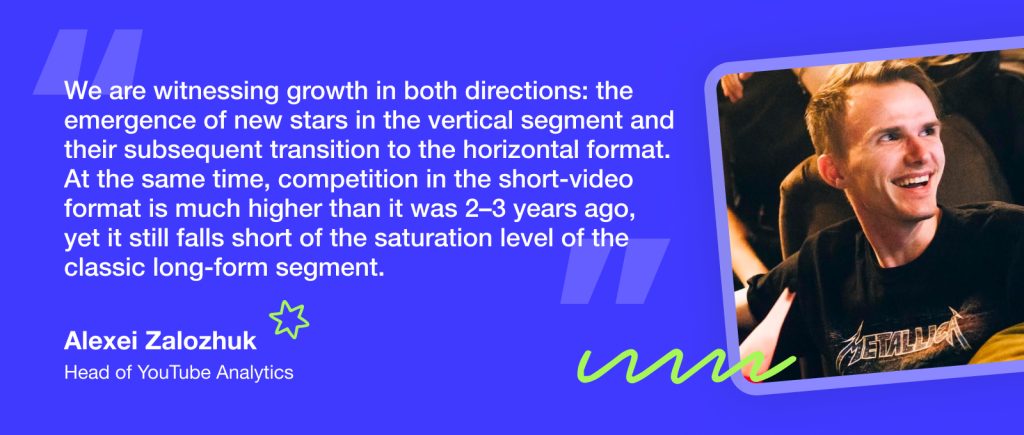
“At present, vertical and horizontal formats on YouTube represent two separate areas with their own audiences and rules for creating and promoting content. They can complement each other, but the overlap between audiences remains limited,” said Alexei Zalozhuk, Head of YouTube Analytics at Mediacube.
“Vertical content is short videos that provide a quick emotional response and instant reach. Horizontal content is a conscious choice by the viewer, allowing the creators to build a personal brand, create long-term value, and build stronger relationships with their audience. While it is easier to attract attention in a vertical format, but the audience ends up being “blurred,” a horizontal format requires more effort, but in the long run, it yields the most loyal subscribers,” one of our senior managers continued.
Viewers accustomed to vertical content rarely switch to long videos, whereas audiences accustomed to long formats find it easier to adapt to short clips. This is why it might be more difficult for Shorts creators to successfully establish themselves in long-form videos, while creators of traditional horizontal content find it easier to master vertical formats.
The platform keeps evolving. From what we've learned from working with creators and brands, one thing stands out:doing both formats seems to really pay off for those channels that give it a go. And meanwhile, YouTube just keeps on blurring the lines between the two. So now, Shorts can show up on channel pages, in recommendations, and in search results.
Here at Mediacube, we can audit a YouTube channel and help creators figure out how to build a plan for steady growth that works across both formats. By looking at your performance, we can help you see where you should really be putting your time and energy. Don’t forget that Mediacube experts are always ready to advise you on ways to monetize your YouTube channel so you can earn more.
Frequently Asked Questions on Shorts vs Long-Form Videos
We gave you a lot to think about, right? To sum it up, let’s compile all the necessary information in several Q&As that might help you choose the path you are most comfortable with.
Do Shorts reduce views on long formats?
No! Generally, they can’t. On the contrary, Shorts can bring you a new audience who wants more.
Can creators earn money from Shorts only?
Of course! Shorts can earn some cash through the YouTube Shorts revenue pool, though each view tends to pay much less than your average ad on a traditional video.
Is there any difference between how the YouTube algorithm treats short-form and long-form content?
If you have ever asked yourself how the YouTube algorithm for Shorts and long forms works, we have the answer. Its main difference is that Shorts help you be discovered quickly, while long clips work on keeping the audience watching longer and becoming hooked and loyal.
What is the best video length for YouTube monetization?
It really depends on every creator and the formats they work with. For example, long videos running around 8 to 20 minutes get a nice balance between keeping viewers engaged and earning.
Can a beginner start with Shorts?
For a lot of newbies in creative industries, Shorts is a good way to fast-track getting to new audiences and try out different content ideas without much to lose. If you need ideas, don’t ever hesitate to address actionable tips for your YouTube channel growth.
YouTube Shorts vs Long Videos: Which Strategy Works Best in 2026?
All that brings us to the conclusion: don’t rush from side to side, because in the end, it all comes down to what you’re trying to achieve.
Are you starting from scratch? Shorts are your best bet for getting in front of a big crowd fast and experimenting with new ideas.
Are you trying to make a steady income? Here, long-form videos are still pretty much the only way to go if you want a stable revenue stream.
Are you aiming at rapid growth? In this case, you’d better mix two options and raise your chances to grow.
By 2026, the real YouTube pros know that the right way to succeed is no longer about picking one or the other; now it's about knowing which format to use depending on your goals. And if you need a navigator and a support system to create your own strategy that lets you spend most of your time on what you really want and love — creating your unique content — don’t hesitate to join Mediacube. Our experience and knowledge will help you grow and bloom as a creator further.