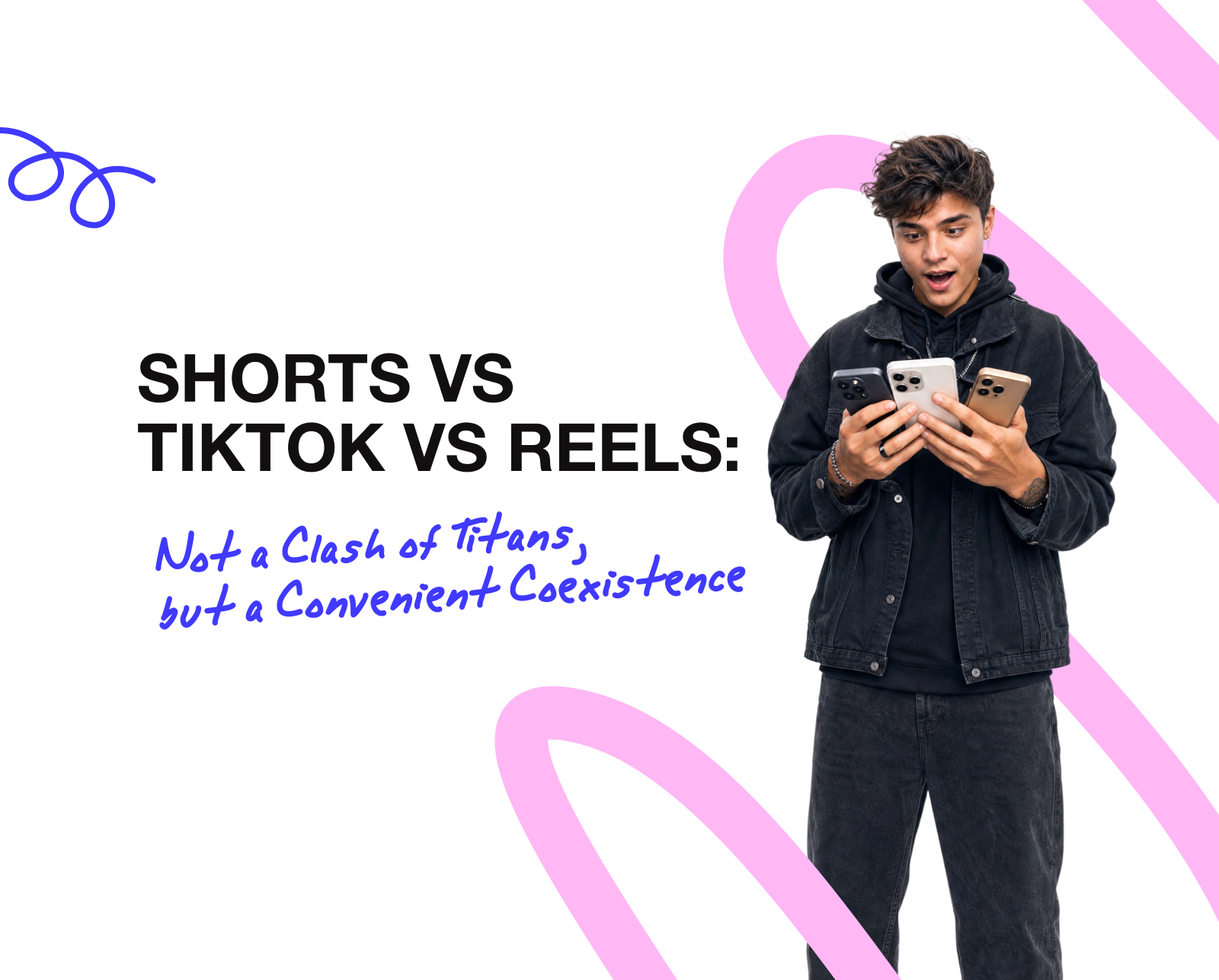
There are debates on the Internet. Here and there, you can notice discussions like ‘YouTube Shorts vs TikTok?’ in the forums. YouTube Shorts, TikTok, and Instagram Reels have become the powerhouses of 2026 when it comes to discovering things, getting more viewers, and making money. In some cases, a single 30-second clip on any of these platforms can collect millions of views before the creator has even published a full video. Brands build whole campaigns around short-form vertical content today. And even some of the old-school creators are getting in on the action, using Shorts to give their channels a much-needed boost and attract a new audience.
The thing is, choosing which platform is right for you has now become more complicated than it used to be. TikTok is the place to go if you want to get a video to go viral overnight. Instagram Reels is still top-notch for building a personal brand and getting sponsored content. Then there’s YouTube Shorts, which offers the best of both worlds: search visibility, a long-lasting reach, and the potential to make money. And the old “post everywhere” advice doesn’t work anymore.
In this guide, we’re going to take a close look at how Shorts, TikTok, and Reels have changed by 2026; how to put together a strategy for making short-form content that works, and so much more. Buckle up, we’re going to find out what works for you and what doesn’t.
The Current State of Short-Form Video
Today, it will be fair to admit that short-form video content is one of the very first things a lot of people see from a creator, a brand, or a product. In fact, for a lot of channels, Short-type clips, TikTok entertaining videos, and Reels are now getting more views than their longer, more elaborate uploads.
The main reason is how platforms now work. They’re putting a lot more emphasis on helping users find new stuff they’ll be interested in, rather than just showing them more content from people they already know. The upshot of this is that users no longer need to subscribe to your channel in order to see your content. Algorithms are constantly testing your videos against new audiences and scaling up your content depending on whether people stick around, watch it, or share it. All this has turned the entire online creator economy on its head.
As a result, a new creator with no followers at all can suddenly outshine an established influencer if their content is spot on and strikes a chord. Short-form has also become the main way that long-form creators get new audience members on board.
Here are a few examples of how this plays out:
- A creator will use Shorts to ping viewers towards their longer videos, memberships, and streams;
- A podcaster will turn an interview into a vertical clip;
- A brand will take its marketing campaigns and convert them into Reels-first content;
- A streamer will use short-form gaming clips to build a way for new people to discover them.
More often than not, short-form is no longer just a way to get people to watch your long-form content. It is the content business. TikTok users average 54 comments per video, while Instagram users average 35 comments per video, indicating a higher level of conversation and engagement on TikTok.
Trends that Shape Platforms

Although TikTok, Shorts, and Reels have their own unique twists, all three of these video-sharing platforms can now be defined by several major trends.
- AI-assisted content creation changes the usual order
AI editing tools made it ridiculously easy for creators to produce high-quality content. They’re now using AI for everything from scripting and subtitles to voiceovers and editing automation, and the result is a massive increase in the amount of content being published across all three platforms. Of course, that also means that algorithms are getting better at spotting low-effort, copycat content — so just uploading a bunch of generic AI clips isn’t going to cut it anymore.
- Faceless and automated channels are still on the rise
You don’t need to have a face on camera to create a hit content channel. In fact, some of the fastest-growing niches right now include AI explainers, educational animations, and documentary-style storytelling.
- Search is becoming even more important
Now, TikTok is still very much an entertainment-driven platform, but all three of the main players are starting to take search behaviour more seriously. Users are actively searching for tutorials, product recommendations, software reviews, and all sorts of other stuff. And because YouTube is the world’s largest search engine now, searchable Shorts can keep on generating traffic long after they’ve first been published.
- Educational content is in demand
One of the surprises of 2026 has been the outperformance of educational creators. Whether you’re explaining a tricky concept in 30 seconds or creating fast tutorials, there’s a growing audience that’s hungry for high-quality educational content, which is why coaches, consultants, educators, and B2B creators are investing in Shorts and Reels content.
- Retention is more important than going viral
Previously, growth was all about getting in on the latest trend and racking up as many views as possible. But now, platforms are starting to reward creators who can build a loyal following rather than just going viral in views. That means focusing on completion rates, re-watches, shares, saves, and other engagement metrics matters more.
Let’s have a look at the latest statistics and usage data in this table.
| Metric/Platform | TikTok | YouTube Shorts | Instagram Reels |
| Core positioning | Entertainment, discovery | Part of the ecosystem, discovery (via search) | Brand, social identity |
| Average watch time | 95 minutes/day average user session time | 40–45 minutes/day | 25–30 minutes/day |
| Monthly active users + daily views | 1.9B/not disclosed | 2B+/200B+ | 2B+/140B+ |
| Demographics | Younger audiences, Gen Z | Broad multi-generational audience | Millennials + lifestyle-focused users |
| Strongest regions | US, Southeast Asia, Latin America | US, India, Brazil, Mexico, Indonesia | US, Europe, India |
| Average engagement rates | 2.5–4.5% | 3–5.9% | 1.5–3% |
| Maximum video length | 10 min | 3 min | 90 seconds |
| Monetization availability | Creator programs, TikTok Shop, brand deals | Revenue sharing, memberships, affiliates, sponsorships | Sponsorships, affiliates, creator marketplace |
| Creator Revenue Share | $0.40-1.00 per 1K views | 45% of pooled ad revenue | Bonus programs ($100-35K/mo) |
| Best for | Fast virality | Stable creator business | Influencer marketing, branding |
While all three platforms are competing for short-form attention, they’re each focused on very different things when it comes to what kind of user behaviour they’re trying to encourage. That difference highlights the contrast between them.
TikTok is all about producing one hit after another and constantly experimenting to see what gets the most likes fast. Instagram Reels is keeping up the social vibe and helping creators show off their unique personalities. Meanwhile, YouTube Shorts is trying to integrate short-form videos into the giant YouTube universe.
The Biggest Difference: Entertainment vs Ecosystem vs Social Identity
At first glance, TikTok, YouTube Shorts, and Instagram Reels appear almost indistinguishable from one another. All three platforms use vertical videos, feed scrolling, recommendation systems that try to offer you what you’ll like, trending sounds, and algorithms designed to keep creators happy. But they’re operating in very different ways.
This distinction affects the way new audiences and existing followers behave and engage, how creators get paid, and how long their content stays relevant.
TikTok — the entertainment machine
TikTok is the best place to aim for rapid-fire virality and making content hits. Their algorithm focuses on what grabs your attention. It also means the platform can test content against a wide range of audiences and scale up a winning video at a fast speed when it sees a high level of TikTok’s engagement rate. This is the sole reason for the For You Page to exist. The number of active users reaches a rough 1.9 billion monthly.
If you’re making content for TikTok, know that it rewards videos with:
- strong hooks in the first seconds;
- fast pacing;
- trend participation;
- emotional reactions;
- curiosity loops;
- replay value.
Compared to Shorts and Reels, TikTok experiments with how its algorithm behaves. Sometimes the reach on your video can change in an instant, sometimes that means more people see your content.
Biggest advantages of TikTok
The platform offers the quickest route to getting known as a new creator. If your main goal is to go viral, ride a current trend, or test and iterate on new content ideas, TikTok is one of the most suitable places for short-form video creators. Both TikTok and Instagram Reels provide native tools for recording and editing videos, but TikTok’s editing capabilities are generally considered superior, enabling more creative video production, and are famous because of the TikTok watermark in the end.
Biggest disadvantages of TikTok
The lifespan of TikTok content is relatively short. Most of your views will probably come in the first few hours or days after you post. After that, it’s much harder to get seen. This can make it tricky to build up a stable following and figure out what kind of content earns you money over the long term.
YouTube Shorts — the ecosystem scheme
Unlike TikTok, YouTube Shorts is a part of the system, connected to the YouTube universe in a way that creates long-term benefits for creators. A viewer can easily click from a Shorts to a long video, a livestream, or wander through community or feed posts. This makes it easier to keep an audience hooked compared to most other short-form-only platforms.
As of today, YouTube Shorts generates 200 billion daily views across 2 billion monthly users with an average engagement rate of 5.91%. For YouTube, deceleration is nowhere near close — over 12 million Shorts are uploaded daily, and they have to extend the maximum duration to 3 minutes.
Many Shorts continue to get traffic for weeks or even months after they first go up, because they’re still turning up in search results, suggested feeds, and topic recommendations. TikTok and Reels can give you a huge amount of exposure quickly, but at the moment, YouTube offers one of the best ecosystems for community building.
Biggest advantages of Shorts
YouTube Shorts is the strongest foundation for building a sustainable creator business. This is because the monetization options on YouTube are more varied than just Shorts ad revenue, so you can do affiliate marketing, sponsorships, and so on.
Biggest disadvantages of Shorts
Shorts’ views don’t grow that quickly. With TikTok, the algorithm is pretty aggressive when it’s testing content from new creators. But YouTube Shorts need a bit more data before they start to scale up.
Instagram Reels — the social identity platform
Instagram Reels is deeply tied to the rest of Instagram’s social side. Reels, besides its fun side, is a platform about who you are, your sense of style, the people you hang out with, how others perceive you, and how you present yourself to the world. If we look at the number of active users, it is 2B+ monthly with 30.81% of average reach rate.
Instagram’s algorithms are super keen on engagement that’s based on your relationships with the people you follow: likes, shares, comments on stories, and who’s visiting your profile. Compared to TikTok, where people often just watch stuff and then move on, Instagram viewers are way more likely to get invested in the person behind the content over time. This ends up giving brands a way to connect with fans in a more meaningful way and drive higher quality conversions for sponsorships and affiliate marketing. Though the Explore page exists to prove that it does care about your interests.
Biggest advantages of Reels
Instagram has one of the strongest ecosystems for sponsorships, affiliate campaigns, and influencer marketing right now. Brands love Instagram audiences because they can be viewed as mini-landing pages for your profile. And Reels is suitable for creators building up authority-based personal brands.
Biggest disadvantages of Reels
New creators tend to struggle with getting found on Instagram Reels. Unlike TikTok, which cares about how good your content is, it’s more about how many friends you have and how well-connected you are on Instagram.
One of the biggest oversights when comparing Shorts, TikTok, and Reels is the content lifespan. TikTok is notorious for unleashing a tidal wave of traffic almost immediately after posting. But after the momentum is passed, it’s left behind. Instagram Reels shine brightest with an audience you already have on the platform. You can get shares and saves to spread the word, but most Reels views still have a relatively short life when it comes to getting that traffic boost. On YouTube, a video might tank at first, but weeks later, it can take off like a rocket when YouTube finally figures out where the audience is.
In practical terms, these platforms have a predictable pattern to how they work:
- TikTok = instant gratification, highest spikes
- Reels = maximum social interaction
- Shorts = longest term appeal
Monetization Comparison: Which Platform Earns the Most?

How do you turn attention into a decent income? And that’s where the big differences between TikTok, YouTube Shorts, and Instagram Reels become apparent. So when we’re looking at how much money you can make from short-form videos, focusing on RPM is just not the only (or even the best) way to do it. What matters is the quality of your audience, how long your content stays relevant, which advertisers are on board, how well your audience converts, what niche you’re in, and how many different ways you’re earning cash.
YouTube Shorts
YouTube Shorts has the most fully-fledged monetization system of the three. That’s because they now pay creators directly for YouTube ads shown between their Shorts videos. But here’s the thing: the real benefits of Shorts go further than just getting paid. The best creators on YouTube do it all: Shorts ads, long-form monetization, affiliate marketing, sponsorships, etc.
Plus, because Shorts integrates with YouTube Search and recommendation systems, you can continue earning from your older content long after you first published it. Shorts is a way to get new followers and keep your existing ones coming back.
Creators get 45% of the ad revenue share, but the requirements to be eligible for monetization are:
- 1,000 subscribers + 10 million Shorts views in 90 days
TikTok Videos
TikTok stands out as one of the fastest ways to grow your audience, but making some cash on the platform can be downright tricky. Depending on the audience location, engagement, and length, TikTok ads pay $0.40-1.00 per 1,000 views.
The good news is that there are a few ways to earn, including:
- creator rewards programs;
- TikTok Shop;
- livestream gifts;
- affiliate campaigns;
- sponsorships;
- brand collaborations.
TikTok Shop sales in the US reached $15.8B in 2025. Needless to say, they aim so much higher this year.
TikTok is a platform designed to get you hooked, to get you clicking on and off at a rapid rate. That makes it the perfect place to sell products and (popular) music for creators and artists, lifestyle influencers, and anyone who’s all about the latest trends. But making a steady income on TikTok remains a real challenge. Creator fund payouts and reward programs often fluctuate depending on region, advertiser demand, and platform changes.
Instagram Reels
Instagram does have direct payouts in some creator programs, but the platform’s advantage is its ability to link brands with influencers. Just think about it: for influencer content, influencer rates achieved 2.18% of average engagement rate. Reels is the best for landing sponsorship deals; getting in on affiliate marketing; bagging luxury brand partnerships; and pushing personal brands to the next level, especially when it comes to creator-led commerce.
Plus, Instagram has built-in advantages — shopping’s easy because of its integrated tools, you can chat with people right through the app, links are available on profiles, and even stories can drive sales. Also, there’s a special invite-only bonus program that can earn you $100-35,000 monthly based on engagement metrics.
All of this can be summed up in one table.
| Factor | TikTok | YouTube Shorts | Instagram Reels |
| Direct platform payouts | Moderate | Strongest overall system | Limited/select programs |
| RPM stability | Unpredictable | More stable | Highly niche-dependent |
| Sponsorship potential | Strong | Strong | Very strong |
| Affiliate marketing | Good | Very strong | Very strong |
| Long-term monetization | Weak to moderate | Strongest | Strong |
| Evergreen revenue potential | Low | High | Moderate |
| Ecommerce | Very strong | Good | Very strong |
| Creator businesses | Moderate | Excellent | Strong |
| Personal brands | Moderate | Strong | Excellent |
Faceless content does well on all three platforms, but YouTube Shorts might just have stood out, especially with its flow of evergreen traffic, search visibility, and better monetization set up. TikTok is still the place to be if you want to go viral fast, while Reels does its best for content that’s a bit more polished and aimed at specific niches.
AI-generated content is pretty common these days, but it turns out different platforms handle it in different ways. If you want to succeed on TikTok, you still need to make content that moves fast, but don’t forget to label it and don’t use deepfakes. Also, fully AI-generated videos are prohibited. YouTube treats AI content even harsher. If you produce such videos, you are to label them as well, but don’t even think about monetizing them.
When the system finds AI-slop content or reused content, the worst-case scenario: it might block the channel permanently. It’s not that Instagram is more soft towards AI usage, but it seems that it more embraces it in comparison to other platforms. Of course, it demands to label every video, otherwise it gets penalized distribution or account restrictions.
That’s where a solid creator support system matters, considering all that abovementioned. At Mediacube, we’re working with YouTube, TikTok & Instagram creators and offer them multidimensional support. It’s not only about monetization, optimization, and rights preservation. It’s also about helping you navigate the creator ecosystem so you can play the game on your own terms.
Different Creator Types — Where to Go When You Are…
The best short-form platform depends on being capable of finding the right fit for your content style, the way your audience behaves, and what you’re trying to make money from.
Beginners
TikTok is generally the easiest platform for new creators because the algorithm puts small accounts to the test. This makes it a great place to learn how to grab attention, keep people engaged, and figure out what makes your audience tick.
YouTube Shorts can be slower to get video views, but its long-term benefits and ability to keep getting discovered over time can be substantial.
Advice for a beginner:
- If you want to learn fast, go with TikTok;
- If you’re in it for the long run, then YouTube Shorts is probably a better bet;
- If personal branding is key to you, then Instagram Reels are probably your way.
Coaches, Experts & Educators
Educators and people who are building authority in their field generally do best on YouTube Shorts. This is because of the way YouTube integrates with search and the way its algorithm recommends videos that are still relevant after they’ve first been posted. Instagram Reels is also a good platform for coaches and experts who are building a personality-driven brand.
Advice for experts:
- If you want to build up authority and get evergreen traffic, then YouTube Shorts might suit you.
- If building a personal brand is key, then Instagram Reels are your choice.
Influencers and Lifestyle Creators
Instagram Reels is still one of the best platforms for lifestyle influencers in the fashion, beauty, fitness, travel, and food niches. This is because of the way Instagram audiences connect with their favourite creators, making Reels especially useful for sponsorships and affiliates.
TikTok is still an option, too, if you want to get fast visibility and tap into the latest trends.
Businesses and Marketers
If you want to get rapid awareness and ecommerce-focused marketing campaigns, then TikTok is the way to go. Instagram Reels, on the other hand, is more geared towards building a premium brand and doing influencer marketing.
YouTube Shorts is probably the best option if you want to do searchable educational marketing and build up long-term leads, especially if you’re in the SaaS, AI, or B2B space.
You probably will ask us a reasonable question: should you post everywhere? In 2026, it’s best to focus on repurposing content rather than just copying and pasting identical posts across platforms. Existing content is a perfect base for adapting and using it as a cross-promotion on different platforms.
Want to Grow Faster on YouTube?
Get a free channel audit from Mediacube experts. Identify what’s holding you back and receive a clear action plan to boost your growth.
Get a Free AuditAlgorithm Comparison: Priorities Differ
Algorithms are the reason why you’ll often see two almost identical videos performing wildly differently across TikTok, Shorts, and Reels. Each platform is essentially trying to game a different set of outcomes. As a result, creators who just hit ‘share’ on every platform without doing any research are bound to be mystified by how the algorithms work.
TikTok Algorithm
TikTok has the most aggressive of all the algorithms when it comes to rapidly testing new content. The entire platform is built around this idea of an interest graph, where videos are distributed based on how people behave rather than who they follow. TikTok’s got a number of key signals that it looks for, including:
- completion rate;
- rewatches;
- early engagement velocity;
- strong hooks;
- watch time percentage;
- trend participation;
- emotional reactions.
And it’s these first few seconds that are absolutely crucial. If people are scrolling away quickly, you’re going to find that your video won’t show any results at all.
YouTube Shorts Algorithm
YouTube Shorts is a bit of a different animal because it lives in a much bigger ecosystem. Instead of just looking for that initial spike of engagement, YouTube is interested in what makes users happy in the long run: do they like the content enough to stay? Do they come back for more? The signals that YouTube looks for include:
- swipe-through rate;
- retention curves;
- repeat viewing;
- viewer satisfaction;
- session watch time;
- long-term audience response;
- conversion into additional content consumption.
Unlike TikTok, Shorts videos can keep getting tested out and refined long after you’ve uploaded them. This is why you might find that some of your videos suddenly start doing surprisingly well weeks after you first put them up.
Instagram Reels Algorithm
Reels certainly supports discovery, but at the same time, the platform is focused on relationship-based engagement. The signals that Instagram looks for are different from TikTok, too. It’s more about shares and saves and other interactions with people.
Instagram audiences are more likely to engage with people they already know, which is great for building long-term relationships with your audience, especially if you’re an influencer or personal brand. But at the same time, it makes it harder for new creators to break through.
Audience Differences: Let’s Draw The Portrait
Even though TikTok, YouTube Shorts, and Instagram Reels are all part of the short-form video game, their engaged audiences behave in different ways. Working out those differences is important because the same piece of content can send very different vibes depending on where it ends up.
TikTok Audience

TikTok still has the youngest and most impatient crowd. It’s dominated by Gen Z and younger Millennials who absorb content vigorously and expect a constant stream of new and interesting stuff. Primary age is around 18-34. Typical TikTok users are completely dependent on trends. They scroll so fast they’re just looking for something to grab their attention quickly and make them laugh or feel something raw and genuine. Visuals don’t have to be super polished, as long as it’s fast, authentic, and has hooks to keep them on board.
TikTok audience loves:
- the latest trends and memes;
- a good story;
- a bit of slapstick humour;
- the kind of content that makes you feel something.
Key elements are: trending sounds, sloppy production, and an air of chaos.
YouTube Shorts Audience

YouTube Shorts has the biggest audience demographic (primary age is around 18-49) because it lives inside the biggest video-sharing platform on the web. So it’s not just for teenagers; it’s got people of all ages using it, and user behaviour tends to be a bit more thoughtful compared to TikTok.
YouTube audiences are happy to follow their favourite creators, and they like to move between short form and long form. The overall vibe on Shorts is a bit more structured and info-driven. Creators care about good storytelling and keeping viewers hooked.
Shorts viewers are more likely to watch:
- tutorials and guides;
- explainers & educational clips;
- gaming;
- reviews;
- commentary & analysis.
Key elements are: clearer pacing, better audio quality, and a bit more niche-specialization.
Instagram Reels Audience

Instagram Reels has the most identity-driven crowd of the three. People are super concerned with aesthetics, lifestyle, social status, and just generally looking ‘cool’. Primary age is 18-44.
Instagram content viewers love to save, share, send DMs, and follow creators they relate to or genuinely aspire to be like. Speaking of shares, Reels are shared 4.5B times in DMs on average (daily!).
The audience leans towards Millennials and older Gen Z, especially in places like:
- fashion;
- beauty;
- fitness;
- travel;
- luxury lifestyle;
- entrepreneurship.
Key elements are: a cleaner aesthetic, a strong “you” personality.
And keeping in mind this ever-shifting nature of systems and algorithms, don’t hesitate to ask for help from those who have all the necessary experience and knowledge. Mediacube helps creators build systems that turn short-form attention into real, stable revenue across multiple platforms.
Frequently Asked Questions on Shorts vs Reels vs TikTok
Choosing the right path might seem to be confusing and overwhelming. But do not fear: we’re here to help you find the right place to start growing and overall becoming a better creator with clear goals and a solid strategy. Here we combined the most topical questions on that matter!
TikTok is still the option for pursuing virality and capitalising on the latest trends, but YouTube Shorts is doing better at helping creators build a loyal audience over time, generating traffic that keeps coming back, and setting up monetization systems.
Instagram does have limited monetization options in certain regions, but most creators end up earning through regular sponsorships, affiliate marketing, and teaming up with brands for partnerships.
Yes, you can re-upload the same video to all three of them, but what’s usually more effective is adjusting it to make it fit the tone and style of each individual platform.
Honestly, YouTube Shorts looks like it might be the best for faceless creators in terms of the long game: search visibility, steady traffic, and a robust monetization system make it a solid choice.
TikTok is still the fastest of them when it comes to getting any given piece of content seen by a lot of people.
Yes! And the best part is that it’s especially powerful when you’re using it in combination with longer-form video and all the other monetization tools that YouTube has to offer.
Hashtags are still important to a degree, they help the platforms figure out where your content fits in.
As of today, Instagram Reels is probably best for getting your brand out there through influencer marketing and becoming a brand ambassador.
Which Platform Should You Choose?
Choose TikTok.
Choose trends. Choose dopamine-speed editing. Choose posting five times a week because the algorithm forgot you existed six hours ago. Choose hooks that scream in the first second. Choose viral sounds, chaotic comment sections, overnight reach, and analytics that make no sense until suddenly they do. Choose audience spikes. Choose attention before loyalty.
Choose TikTok if your goal is momentum.
Choose YouTube Shorts.
Choose evergreen views. Choose searchable content. Choose building an ecosystem instead of chasing one viral hit. Choose turning short-form viewers into subscribers, long-form viewers, customers, members, and community. Choose videos that still get traffic months later, while TikTok has already moved on to another trend. Choose depth disguised as short-form content.
Choose Shorts if your goal is longevity.
Choose Instagram Reels.
Choose aesthetics. Choose personal branding. Choose curated feeds, DM shares, Story funnels, and audiences that care who you are as much as what you post. Choose sponsorships. Choose a visual identity. Choose followers who remember your name instead of just your latest video.
Choose Reels if your goal is influence.
No matter what path you decide to choose, you can always choose Mediacube as your guide and support provider to navigate complex and amazing ways of content creation.